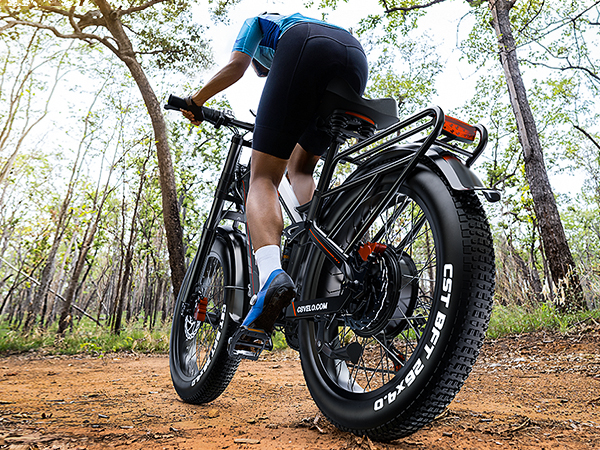
You are looking to get a fat tire electric bike. You have probably seen them tearing up local trails, cruising down beaches, or making a random bumpy city street look like a smooth highway. 4-inch wide tires look cool, no doubt about it. But let’s be honest: buying an e-bike is a real investment, and the last thing you want is a 70-pound paperweight sitting in your garage because it doesn’t fit your daily life.
Most generic guides will just tell you to “look at the motor wattage” or “check the battery.” But after helping hundreds of riders pick their perfect setup, I can tell you that the real decision comes down to how the bike fits your space, your daily commute, and your body type.
Let’s break down how to actually choose a fat tire e-bike that you will love riding every single day.
The Real Truth: Why Foldable vs. Full-Sized Matters Most
Before you even look at motor specs, you need to ask yourself one question: Where are you going to store this bike, and how are you getting it to the trail?
Fat tire e-bikes are inherently heavy. If you live on the third floor of an apartment complex with no elevator, a standard full-sized e-bike is going to give you a workout before you even turn the motor on. This is where the industry shifted toward folding fat tire electric bikes.
Scenario A: The Apartment Dweller & Weekend Commuter
If you have limited space, want to toss the bike into the trunk of a sedan, or take it on an occasional train ride, folding models are a lifesaver.
- For a solid, dependable daily commuter that handles rough city potholes without breaking a sweat, a well-rounded folding frame is key. The Cybervelo EK4 folding fat tire electric bike offers that classic rugged, fat-tire stability but folds down to fit into tight spaces.
- If you want something with a bit more punch for steeper hills or longer weekend trail rides, look into options like the Cybervelo EK5 folding electric bike or the Cybervelo EK6 folding electric bike. These models bridge the gap between “easy to store” and “ready for the dirt trails.”
Scenario B: The Dedicated Trail Rider & Long-Distance Cruiser
If you have a garage, a dedicated bike rack, or simply prefer the traditional, ultra-sturdy feel of a solid frame, skip the folding mechanism.
- Need pure power and range for serious off-roading? Look at high-performance builds like the heavy-duty Cybervelo EK8 or the sleek Cybervelo EK9. They give you maximum frame rigidity when you are pushing the bike to its limits on loose gravel or sand.
Frame Geometry: Step-Thru vs. Step-Over
Here is a common buying mistake: people buy a bike based purely on looks, only to realize it’s a pain to get on and off.
| CHOOSING YOUR FRAME | |
| Step-Over (Traditional) | Step-Thru (Open Frame) |
| * Maximizes frame rigidity* Sporty, aggressive stance* Ideal for trail riding | * Easy to mount/dismount* Great for stop-and-go traffic* Accommodates shorter riders |
If you are commuting in a city with constant stoplights, or if you have any stiffness in your hips or knees, a traditional step-over frame can get annoying fast.
A 26-inch step-thru model, such as the Cybervelo EK10 26 step-thru ebike, gives you the massive benefits of 4-inch fat tires for stability but makes mounting the bike effortless. It’s highly recommended if you plan on carrying groceries on a rear rack, as tilting a heavy, loaded bike to swing your leg over the back is a recipe for a spill.
Real Questions Buyers Ask (FAQ)
Are fat tire e-bikes harder to pedal if the battery dies?
Yes, absolutely. Those wide tires create more rolling resistance on asphalt. According to bicycle dynamics standards outlined by organizations like the International Bicycle Fund, wider tires at lower pressures increase ground friction. While this is amazing for grip on sand or snow, it means you do not want to pedal a fat bike home on pure leg power if your battery goes flat. Always buy a battery with roughly 20% more range than your daily commute requires.
What tire pressure should I actually run?
This is the secret sauce of fat tires. You don’t pump them up hard like a road bike.
- For street riding: Stay around 20-25 PSI for lower rolling resistance.
- For sand, snow, or loose dirt: Drop it down to 10-15 PSI. This flattens the tire out, giving you a massive contact patch that floats right over obstacles.
The Verdict: How to Make Your Choice
Don’t overcomplicate your decision. Match your bike to your lifestyle:
- Choose a folding fat tire model (like the EK4, EK5, or EK6) if you need versatility, live in a smaller space, or want to transport your bike without buying an expensive heavy-duty car rack.
- Go with a full-sized powerhouse (like the EK8 or EK9) if you want top-tier performance and plan to tackle rough off-road terrain right from your garage.
- Pick a step-thru cruiser (like the EK10) if comfort, easy mounting, and practical daily utility are your top priorities.
Still on the fence about which frame size or motor size fits your local terrain? Drop us a line or check out our full community test-ride reviews to see how these bikes perform in real-world conditions.