博客

  • Choosing Your Off-Road Beast: 48V or 60V Fat Tire E-Bike?

    Choosing Your Off-Road Beast: 48V or 60V Fat Tire E-Bike?

    If you have spent any time looking at high-performance fat tire electric bikes, you know that raw power and battery spec numbers often dominate the spec sheets. But when you are choosing between a 48V and a 60V platform, the decision goes way beyond simple electric jargon. It comes down to where you ride, how steep the terrain gets, and how much range you actually need when you are miles away from the nearest wall outlet.

    Fat tires demand serious torque. Rolling over loose sand, mud, snow, or steep mountain trails creates constant resistance. A standard commuter setup just won’t cut it.

    So, should you stick with the industry-standard 48V ecosystem, or do you step up to a heavy-duty 60V setup? Let’s break down what these differences actually mean on the trail, how they affect motor pairings, and which setup aligns with your real-world riding habits.

    Understanding the Voltage Difference: Torque, Speed, and Thermal Efficiency

    Voltage in an e-bike system acts like the pressure in a water pipe. Higher voltage allows energy to flow into the motor more efficiently without drawing excessive amperage.

    • 48V Battery Systems: This is the sweet spot for balance, weight, and versatile power delivery. A 48V setup paired with a wide 20-inch or 26-inch fat tire gives you plenty of low-end grunt for everyday off-roading, light snow, and technical singletracks without overwhelming the frame or rider with unnecessary bulk.
    • 60V Battery Systems: Think of 60V as heavy machinery territory. Higher voltage means higher top-end speed capability, instant acceleration, and noticeably better thermal efficiency when pushing huge wattages up long, punishing inclines.

    Key takeaway: Voltage isn’t just about going faster—it’s about staying cooler under heavy loads. High-amp draws on lower voltage heat up controllers and motors much faster than high-voltage runs at moderate amps.

    Matching Voltage to Wheel Size and Motor Power

    A battery doesn’t work in a vacuum. Pairing the right voltage with the right tire diameter and motor wattage is what turns spec-sheet claims into actual trail performance.

    The Versatile All-Terrain Performer: 48V + Compact Fat Tires

    If you want something agile, stable, and easy to pack into an SUV, a compact fat tire setup is hard to beat. Lower tire diameter (like 20×4.0 inches) inherently gives you better leverage and torque output at lower speeds.

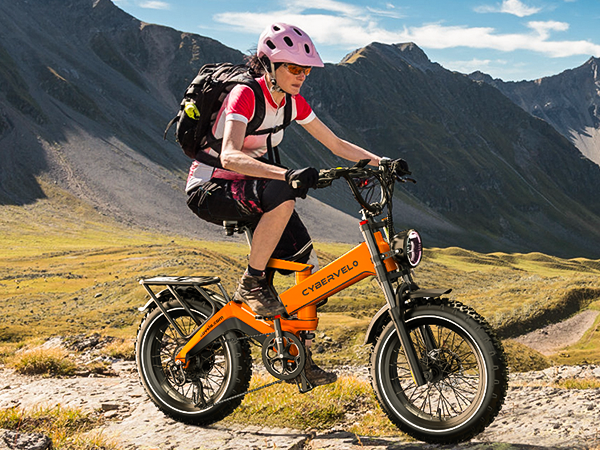
    When paired with a massive capacity battery—such as a 48V 40AH pack—and a punchy 1500W motor, you get an incredible balance. Take a look at folded high-capacity options like the Cybervelo EK6 folding electric bike. The 20×4.0 fat tires combined with the 1500W motor provide aggressive climbing power without making the bike unmanageably heavy. The massive 40AH capacity means you can ride all day without range anxiety, making it ideal for campers, hunters, and moderate-to-heavy off-road enthusiasts who still value portability.

    The Uncompromising Monster: 60V + Full-Sized Fat Tires

    When you scale up to full-size 26×4.0 inch fat tires, you need serious power to rotate those massive rubber contact patches over rough terrain. Smaller motors and 48V systems will do it, but they will labor on steep, technical climbs.

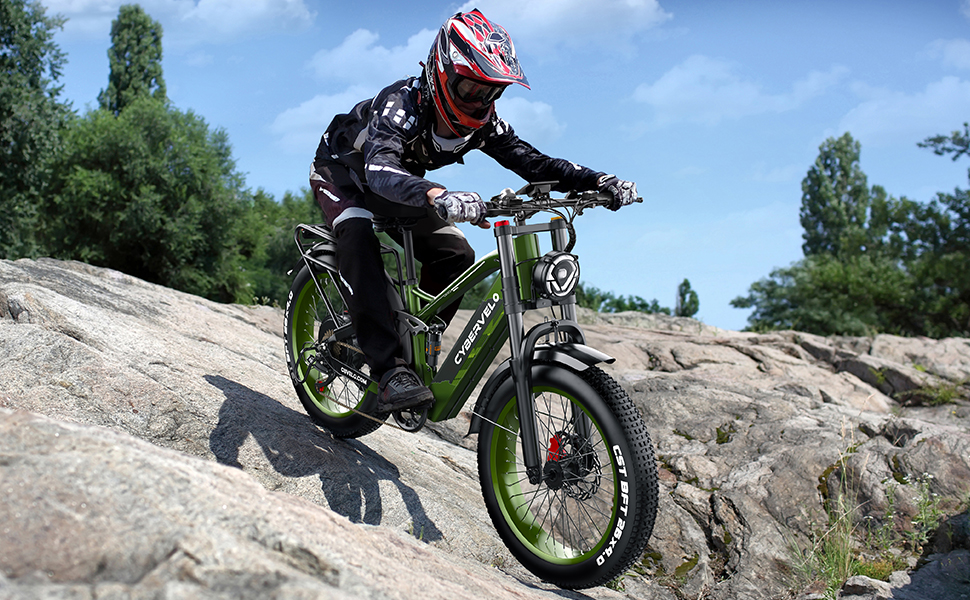
    This is where a high-voltage system shines. Stepping up to a 60V 50AH pack coupled with an extreme 5000W motor, as seen on the Cybervelo EK9, completely changes the game. Full-size 26-inch fat tires roll over rocks and deep ruts with ease, while the 60V architecture feeds the 5000W motor with pure, raw acceleration. This setup is built strictly for riders who demand extreme off-road performance, high top speeds, and relentless hill-climbing capability without overheating.

    Real-World Comparison: Which Specs Match Your Riding Style?

    Feature / Trait48V Setup (e.g., EK6)60V Setup (e.g., EK9)
    Primary TerrainModerate to aggressive off-road, trails, sandExtreme off-road, steep mountain climbs, deep snow
    Tire Size20″ x 4.0″ (Agile & nimble)26″ x 4.0″ (Maximum obstacle clearance)
    Power Output1500W Peak / Solid torque5000W Peak / Extreme acceleration
    PortabilityHigh (Foldable options available)Full-frame stability / Heavy-duty
    Rider FocusRange, agility, easy storageRaw power, maximum speed, deep terrain

    Buying Guide: How to Make the Final Choice

    Choosing between these two setups comes down to three practical questions:

    1. How steep and deep are your local trails? If you ride packed dirt trails, gravel paths, beach sand, or moderate forest tracks, a 48V setup with 20×4.0 fat tires has more than enough torque. If you face vertical mountain climbs or loose, deep mud where you need instantaneous throttle response, 60V is the clear choice.
    2. Do you need to transport or fold the bike? A full-sized 60V platform with 26×4.0 tires is a substantial machine. If you need to throw your e-bike in a trunk, camper, or bed of a truck without heavy lifting equipment, a folding 48V long-range option like the EK6 provides the perfect middle ground.
    3. Range vs. Peak Velocity A high-capacity pack (like 40AH or 50AH) ensures that whether you pick 48V or 60V, you won’t run out of juice halfway through your adventure. But remember: pulling 5000W constantly on a 60V system will drain juice fast if you keep the throttle pinned. Smart power management wins every time.

    In Conclusion

    There is no single “winner”—only the right tool for the job.

    If you want a versatile, space-saving off-road machine with massive range and high torque, go with a high-capacity 48V platform like the EK6. If you want unmatched high-speed off-road performance, maximum obstacle rollover, and raw hill-crushing torque, step up to a 60V monster like the EK9.

    Evaluate your terrain, check your storage space, and pick the voltage that fits your adventure style.
  • What to Know Before Buying a Fat Tire E-Bike: A Complete Buyer’s Guide for Beginners

    What to Know Before Buying a Fat Tire E-Bike: A Complete Buyer’s Guide for Beginners

    You’re thinking about getting a fat tire electric bike? Excellent choice. There’s nothing quite like the feeling of floating over sand, snow, rough asphalt, or bumpy trails on those extra-wide tires. They bring a level of stability, traction, and overall comfort that standard e-bikes just can’t match.

    But here’s the tricky part: once you start looking at the options, you’re immediately hit with a wall of specs, frame designs, and tire choices. Should you get a compact folder? A beefy all-terrain cruiser?

    Buying your first fat tire e-bike is a solid investment, and you don’t want to end up with a beast of a bike that doesn’t fit your lifestyle (or your storage space). Before you click “add to cart,” here is what you actually need to consider to land the perfect ride.

    Fat Tires 101: Why the Extra Width Matters

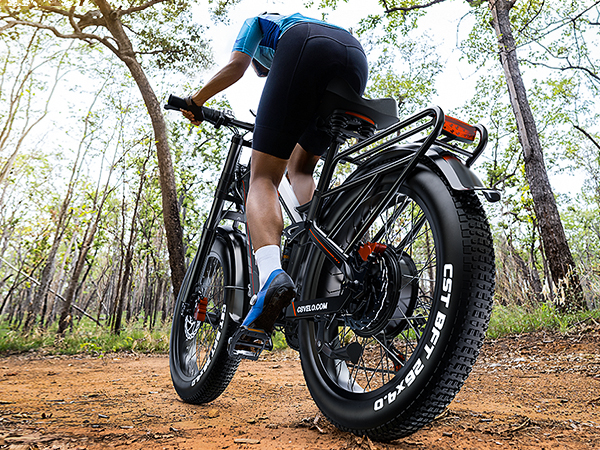
    Standard bicycle tires usually measure anywhere from 1.5 to 2.2 inches wide. Fat tires jump straight to 4.0 inches or more. That extra rubber isn’t just for looks—it drastically changes how the bike handles.

    Traction and Stability

    Because fat tires cover more surface area, they create a larger “contact patch” with the ground. This gives you insane grip on loose surfaces like loose gravel, wet leaves, sand, and light snow where regular tires would skid out.

    Built-in Cushioning

    Fat tires run on much lower tire pressure (PSI) than traditional bikes. You can drop them down to around 10–15 PSI. The low pressure allows the tire to act as a secondary suspension system, soaking up rocks, roots, and pothole shocks before they ever reach your wrists or spine.

    Tire Size & Frame Style: Match the Bike to Your Reality

    When shopping for fat tire e-bikes, you’ll mostly notice two tire diameter categories: 20-inch and 26-inch. Choosing between them usually comes down to two practical questions: Where do you store it? and How do you plan to ride it?

    Option A: The Urban Commuter & Apartment Friendly (20″ x 4.0″)

    If you live in a city, park your bike inside an apartment, or want to toss your e-bike into the trunk of a car for weekend getaways, 20-inch fat tires paired with a folding or compact frame are your best friend.

    • Nimble Handling: Smaller wheels accelerate faster from a dead stop at city traffic lights and feel punchier when maneuvering tight turns.
    • Space-Saving: Models designed with foldability make storage in small closets or garage corners completely stress-free.

    For riders looking for an adaptable daily driver that seamlessly folds away after work, a versatile option like the Cybervelo EK6 folding electric bike offers the perfect blend of compact storage and thick-tire comfort.

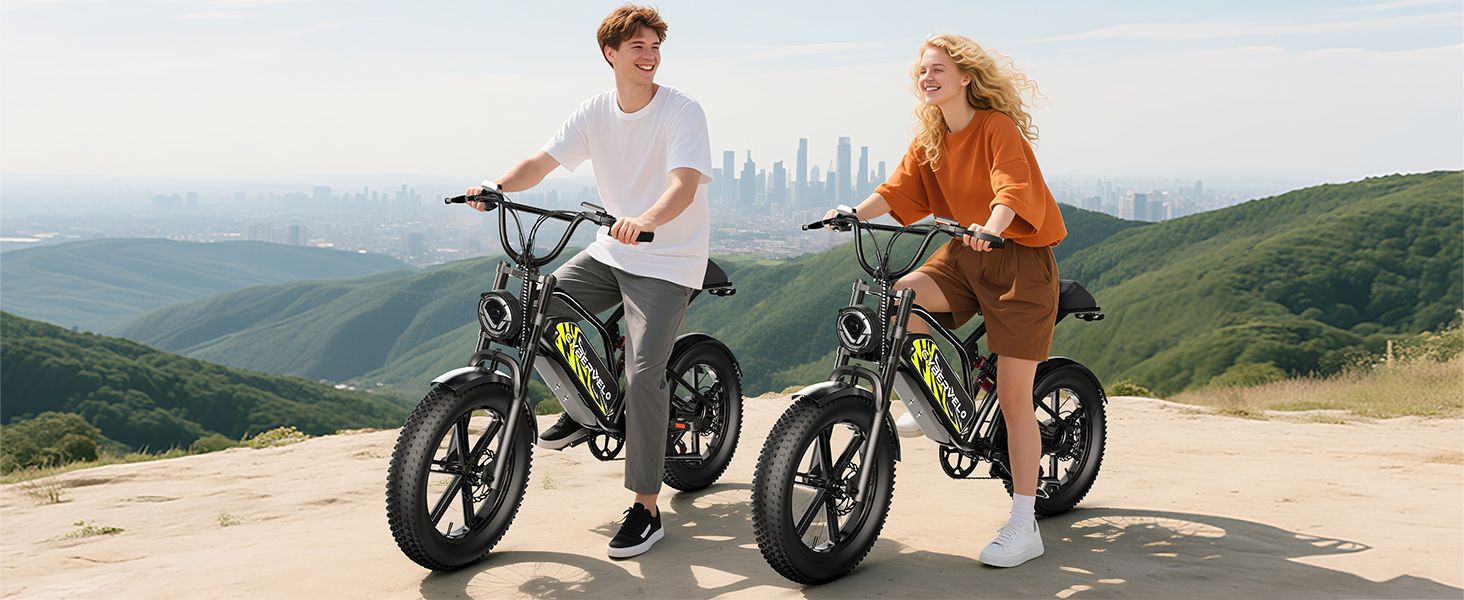
    If you prefer a sportier, moped-style aesthetic for cruising through suburban neighborhoods or handling daily errands without needing to fold the frame every night, check out the rugged Cybervelo EK8 or the feature-packed EK11 fat tire e-bike. Both utilize 20×4.0 setups to keep your center of gravity low and control effortless.

    Option B: The Full-Sized Trail Conqueror (26″ x 4.0″)

    If you are taller, plan to tackle serious off-road trails, or simply prefer the classic feel of a full-sized mountain bike frame, 26-inch fat tires are built for you.

    • Obstacle Rollover: Larger diameter wheels roll over big rocks, deep ruts, and fallen branches much more easily.
    • Top-End Momentum: Once you get moving, 26-inch wheels maintain momentum with less energy expenditure, delivering a super smooth ride on open stretches.

    Riders who want to tackle unpredictable outdoor terrain with maximum stability should look at a full-scale cruiser like the Cybervelo EK9. It gives you that unstoppable monster-truck feel on open trails.

    Essential Buying Checkpoints for Beginners

    Before pulling the trigger on any brand or model, keep these practical points in mind:

    • Total Bike Weight: Fat tire e-bikes are heavier than standard bicycles due to the reinforced frame, beefier tires, and battery. Expect most models to weigh between 60 to 80 lbs. Make sure you can comfortably handle or transport that weight if you need to carry it up stairs.
    • Step-Thru vs. Step-Over Frames: If you plan on wearing casual clothes, carrying gear on a rear rack, or if you have limited hip mobility, consider a step-thru frame design. Step-over frames offer high structural rigidity for aggressive off-road riding.
    • Brake Quality: Stopping a heavy bike with 4-inch wide tires requires serious stopping power. Make sure your chosen model comes equipped with quality disc brakes (preferably hydraulic) to ensure safe stops in wet or mud-slicked conditions.

    Frequently Asked Questions (FAQ)

    Are fat tire e-bikes harder to pedal if the battery dies?

    Yes, they do have more rolling resistance than slim-tire bikes. However, modern multi-speed gear systems (like Shimano drivetrain setups) make pedaling back home at a relaxed speed totally manageable even without motor assistance.

    How much pressure should I put in fat tires?

    For paved roads, aim around 15–20 PSI for lower rolling resistance and better battery range. For riding on sand or soft trails, air down to 8–12 PSI to maximize grip and floatation.

    Can I ride a fat tire e-bike in the rain or snow?

    Absolutely! Fat tire e-bikes excel in wet conditions because of their broad traction profile. Just ensure the electrical components (display, battery pack, motor hub) carry adequate water-resistance ratings and avoid submerging the bike in deep puddles.

    Which Ride Fits You?

    Buying your first fat tire electric bike doesn’t have to be overwhelming. Focus first on how you will store and transport it, then choose the style that matches your daily routes.

    If space, agility, and easy mounting are top priorities, go with a compact 20×4.0 setup like the EK6, EK8, or EK11. If you want maximum trail-rolling power and a traditional full-sized feel, stepping up to a 26×4.0 build like the EK9 will give you all the capability you need.

    Ready to upgrade your daily commute or weekend adventures? Explore the full lineup of high-performance rides at Cybervelo and find the perfect match for your riding style today!

  • 20″ vs 26″ Fat Tire Ebike: Which Size Fits Your Riding Style?

    20″ vs 26″ Fat Tire Ebike: Which Size Fits Your Riding Style?

    Choosing a fat tire ebike often comes down to one fundamental decision: wheel size. While standard tires excel on flat pavement, 4-inch wide fat tires are built to crush sand, snow, rough trails, and pothole-ridden city streets. But when you are choosing between a 20-inch and a 26-inch fat tire electric bike, the riding experience changes completely.

    Is a smaller, agile frame better for your daily needs, or do you need the raw rollover power of a full-size frame? Let’s skip the dry spec sheets and break down how these two setups perform in the real world.

    20″ Fat Tire Ebikes: Compact Power and Everyday Versatility

    If you live in an apartment, love road trips, or simply need a bike that handles tight turns with ease, a 20-inch fat tire ebike is usually the smartest entry point.

    Why Riders Love the 20×4.0 Platform

    • Low Center of Gravity: The smaller wheel diameter lowers your seat position relative to the ground. This gives riders of varying heights—especially shorter riders—a grounded, confident feel when coming to a stop.
    • Foldability and Travel: Most 20-inch fat bikes feature folding mechanisms. You can drop the handlebars, fold the frame, and throw it into an SUV trunk, RV storage compartment, or elevator without removing parts.
    • Torque-Heavy Acceleration: Small wheels turn faster with less energy. When pulling away from traffic lights or navigating crowded park paths, the motor engagement feels punchy and immediate.

    Real-World Recommendation: > If you need maximum portability without sacrificing off-road stability, look closely at a folding build. A prime example is the Cybervelo EK6 folding electric bike. Fitted with 20×4.0 fat tires, it combines heavy-duty traction with a space-saving frame that folds away in seconds—perfect for urban commuters and weekend campers alike.

    26″ Fat Tire Ebikes: Long-Distance Comfort and Trail Dominance

    When your route takes you off the paved path and onto long stretch trails, loose sand, or deep snow, a full-sized 26-inch fat tire ebike takes the crown.

    Why Choose the 26×4.0 Platform

    • Superior Rollover Efficiency: Larger tires strike obstacles at a shallower angle. Rocks, curbs, and exposed tree roots feel significantly smaller under a 26-inch tire, delivering a plush ride even over harsh terrain.
    • Top-End Speed and Cruise Stability: Once up to speed, larger tires maintain momentum with less power drain from the battery. Long-distance commuting on open roads feels smooth, stable, and effortless.
    • Full-Frame Geometry: Tall riders often prefer 26-inch models because the frame proportions offer a natural, stretched-out riding posture that reduces knee strain during long rides.

    Real-World Recommendation: > For riders who want maximum ground clearance, a traditional full-frame feel, and uncompromised trail capability, the Cybervelo EK9 delivers. Equipped with robust 26×4.0 fat tires, this full-size machine glides over unpredictable terrain while offering superior stability at higher cruising speeds.

    Head-to-Head Comparison: Finding Your Match

    Feature20″ Fat Tire Ebike26″ Fat Tire Ebike
    Best ForCommuting, camping, RVing, tight storageLong trail rides, tall riders, deep snow/sand
    ManeuverabilityHigh – sharp turning, snappy feelModerate – steady, sweeping control
    Storage NeedMinimal (Fits in car trunks/closets)Standard garage or bike rack needed
    Terrain RolloverGood on flat surfaces & light trailsExceptional over logs, rocks, and ruts
    Rider Height RangeFits wide range (5’1″ to 6’2″ ) Best for average to tall riders (5’6″ to 6’5″)

    Buyer’s Checklist: Questions to Ask Before You Buy

    1. Where will you store the bike? If you don’t have a dedicated garage or ground-floor storage, carrying a 70lb full-size bike upstairs is tough. A folding 20-inch frame solves this pain point instantly.
    2. How far are your typical rides? For short trips around town or campground loops, 20-inch wheels are plenty comfortable. For 20+ mile cross-country trekking, 26-inch wheels offer better overall efficiency and ride comfort.
    3. What is your height and comfort preference? If you like touching both feet firmly on the ground at stops without leaning, the lower standover height of a 20-inch ebike provides instant reassurance.

    Final Verdict: Which Size Wins?

    There is no single “best” wheel size—only the right size for your daily routine.

    • Choose a 20-inch fat tire ebike if portablility, tight-space storage, and quick urban acceleration are your top priorities.
    • Choose a 26-inch fat tire ebike if you plan to tackle rugged trails, ride long open stretches, or simply prefer the classic, full-size bicycle stance.

    Match your storage reality and riding style to the right platform, and your fat tire ebike will unlock endless miles of adventure.

  • Choosing Your First Fat Tire E-Bike: A Real-World Buying Guide

    Choosing Your First Fat Tire E-Bike: A Real-World Buying Guide

    You are looking to get a fat tire electric bike. You have probably seen them tearing up local trails, cruising down beaches, or making a random bumpy city street look like a smooth highway. 4-inch wide tires look cool, no doubt about it. But let’s be honest: buying an e-bike is a real investment, and the last thing you want is a 70-pound paperweight sitting in your garage because it doesn’t fit your daily life.

    Most generic guides will just tell you to “look at the motor wattage” or “check the battery.” But after helping hundreds of riders pick their perfect setup, I can tell you that the real decision comes down to how the bike fits your space, your daily commute, and your body type.

    Let’s break down how to actually choose a fat tire e-bike that you will love riding every single day.

    The Real Truth: Why Foldable vs. Full-Sized Matters Most

    Before you even look at motor specs, you need to ask yourself one question: Where are you going to store this bike, and how are you getting it to the trail?

    Fat tire e-bikes are inherently heavy. If you live on the third floor of an apartment complex with no elevator, a standard full-sized e-bike is going to give you a workout before you even turn the motor on. This is where the industry shifted toward folding fat tire electric bikes.

    Scenario A: The Apartment Dweller & Weekend Commuter

    If you have limited space, want to toss the bike into the trunk of a sedan, or take it on an occasional train ride, folding models are a lifesaver.

    Scenario B: The Dedicated Trail Rider & Long-Distance Cruiser

    If you have a garage, a dedicated bike rack, or simply prefer the traditional, ultra-sturdy feel of a solid frame, skip the folding mechanism.

    • Need pure power and range for serious off-roading? Look at high-performance builds like the heavy-duty Cybervelo EK8 or the sleek Cybervelo EK9. They give you maximum frame rigidity when you are pushing the bike to its limits on loose gravel or sand.

    Frame Geometry: Step-Thru vs. Step-Over

    Here is a common buying mistake: people buy a bike based purely on looks, only to realize it’s a pain to get on and off.

    CHOOSING YOUR FRAME
    Step-Over (Traditional)Step-Thru (Open Frame)
    * Maximizes frame rigidity* Sporty, aggressive stance* Ideal for trail riding* Easy to mount/dismount* Great for stop-and-go traffic* Accommodates shorter riders

    If you are commuting in a city with constant stoplights, or if you have any stiffness in your hips or knees, a traditional step-over frame can get annoying fast.

    A 26-inch step-thru model, such as the Cybervelo EK10 26 step-thru ebike, gives you the massive benefits of 4-inch fat tires for stability but makes mounting the bike effortless. It’s highly recommended if you plan on carrying groceries on a rear rack, as tilting a heavy, loaded bike to swing your leg over the back is a recipe for a spill.

    Real Questions Buyers Ask (FAQ)

    Are fat tire e-bikes harder to pedal if the battery dies?

    Yes, absolutely. Those wide tires create more rolling resistance on asphalt. According to bicycle dynamics standards outlined by organizations like the International Bicycle Fund, wider tires at lower pressures increase ground friction. While this is amazing for grip on sand or snow, it means you do not want to pedal a fat bike home on pure leg power if your battery goes flat. Always buy a battery with roughly 20% more range than your daily commute requires.

    What tire pressure should I actually run?

    This is the secret sauce of fat tires. You don’t pump them up hard like a road bike.

    • For street riding: Stay around 20-25 PSI for lower rolling resistance.
    • For sand, snow, or loose dirt: Drop it down to 10-15 PSI. This flattens the tire out, giving you a massive contact patch that floats right over obstacles.

    The Verdict: How to Make Your Choice

    Don’t overcomplicate your decision. Match your bike to your lifestyle:

    • Choose a folding fat tire model (like the EK4, EK5, or EK6) if you need versatility, live in a smaller space, or want to transport your bike without buying an expensive heavy-duty car rack.
    • Go with a full-sized powerhouse (like the EK8 or EK9) if you want top-tier performance and plan to tackle rough off-road terrain right from your garage.
    • Pick a step-thru cruiser (like the EK10) if comfort, easy mounting, and practical daily utility are your top priorities.

    Still on the fence about which frame size or motor size fits your local terrain? Drop us a line or check out our full community test-ride reviews to see how these bikes perform in real-world conditions.