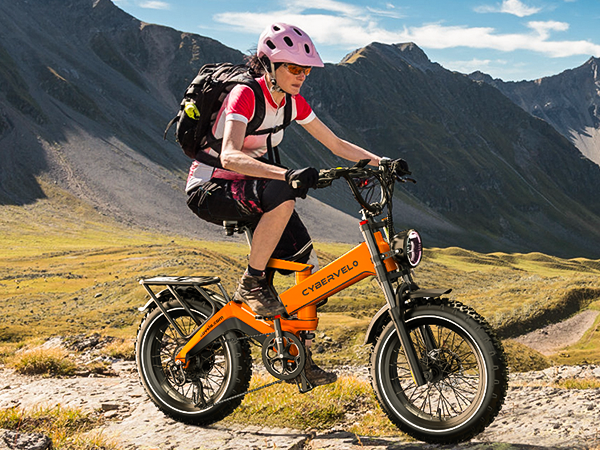
If you have spent any time looking at high-performance fat tire electric bikes, you know that raw power and battery spec numbers often dominate the spec sheets. But when you are choosing between a 48V and a 60V platform, the decision goes way beyond simple electric jargon. It comes down to where you ride, how steep the terrain gets, and how much range you actually need when you are miles away from the nearest wall outlet.
Fat tires demand serious torque. Rolling over loose sand, mud, snow, or steep mountain trails creates constant resistance. A standard commuter setup just won’t cut it.
So, should you stick with the industry-standard 48V ecosystem, or do you step up to a heavy-duty 60V setup? Let’s break down what these differences actually mean on the trail, how they affect motor pairings, and which setup aligns with your real-world riding habits.
Understanding the Voltage Difference: Torque, Speed, and Thermal Efficiency
Voltage in an e-bike system acts like the pressure in a water pipe. Higher voltage allows energy to flow into the motor more efficiently without drawing excessive amperage.
- 48V Battery Systems: This is the sweet spot for balance, weight, and versatile power delivery. A 48V setup paired with a wide 20-inch or 26-inch fat tire gives you plenty of low-end grunt for everyday off-roading, light snow, and technical singletracks without overwhelming the frame or rider with unnecessary bulk.
- 60V Battery Systems: Think of 60V as heavy machinery territory. Higher voltage means higher top-end speed capability, instant acceleration, and noticeably better thermal efficiency when pushing huge wattages up long, punishing inclines.
Key takeaway: Voltage isn’t just about going faster—it’s about staying cooler under heavy loads. High-amp draws on lower voltage heat up controllers and motors much faster than high-voltage runs at moderate amps.
Matching Voltage to Wheel Size and Motor Power
A battery doesn’t work in a vacuum. Pairing the right voltage with the right tire diameter and motor wattage is what turns spec-sheet claims into actual trail performance.
The Versatile All-Terrain Performer: 48V + Compact Fat Tires
If you want something agile, stable, and easy to pack into an SUV, a compact fat tire setup is hard to beat. Lower tire diameter (like 20×4.0 inches) inherently gives you better leverage and torque output at lower speeds.
When paired with a massive capacity battery—such as a 48V 40AH pack—and a punchy 1500W motor, you get an incredible balance. Take a look at folded high-capacity options like the Cybervelo EK6 folding electric bike. The 20×4.0 fat tires combined with the 1500W motor provide aggressive climbing power without making the bike unmanageably heavy. The massive 40AH capacity means you can ride all day without range anxiety, making it ideal for campers, hunters, and moderate-to-heavy off-road enthusiasts who still value portability.
The Uncompromising Monster: 60V + Full-Sized Fat Tires
When you scale up to full-size 26×4.0 inch fat tires, you need serious power to rotate those massive rubber contact patches over rough terrain. Smaller motors and 48V systems will do it, but they will labor on steep, technical climbs.
This is where a high-voltage system shines. Stepping up to a 60V 50AH pack coupled with an extreme 5000W motor, as seen on the Cybervelo EK9, completely changes the game. Full-size 26-inch fat tires roll over rocks and deep ruts with ease, while the 60V architecture feeds the 5000W motor with pure, raw acceleration. This setup is built strictly for riders who demand extreme off-road performance, high top speeds, and relentless hill-climbing capability without overheating.
Real-World Comparison: Which Specs Match Your Riding Style?
| Feature / Trait | 48V Setup (e.g., EK6) | 60V Setup (e.g., EK9) |
| Primary Terrain | Moderate to aggressive off-road, trails, sand | Extreme off-road, steep mountain climbs, deep snow |
| Tire Size | 20″ x 4.0″ (Agile & nimble) | 26″ x 4.0″ (Maximum obstacle clearance) |
| Power Output | 1500W Peak / Solid torque | 5000W Peak / Extreme acceleration |
| Portability | High (Foldable options available) | Full-frame stability / Heavy-duty |
| Rider Focus | Range, agility, easy storage | Raw power, maximum speed, deep terrain |
Buying Guide: How to Make the Final Choice
Choosing between these two setups comes down to three practical questions:
- How steep and deep are your local trails? If you ride packed dirt trails, gravel paths, beach sand, or moderate forest tracks, a 48V setup with 20×4.0 fat tires has more than enough torque. If you face vertical mountain climbs or loose, deep mud where you need instantaneous throttle response, 60V is the clear choice.
- Do you need to transport or fold the bike? A full-sized 60V platform with 26×4.0 tires is a substantial machine. If you need to throw your e-bike in a trunk, camper, or bed of a truck without heavy lifting equipment, a folding 48V long-range option like the EK6 provides the perfect middle ground.
- Range vs. Peak Velocity A high-capacity pack (like 40AH or 50AH) ensures that whether you pick 48V or 60V, you won’t run out of juice halfway through your adventure. But remember: pulling 5000W constantly on a 60V system will drain juice fast if you keep the throttle pinned. Smart power management wins every time.
In Conclusion
There is no single “winner”—only the right tool for the job.
If you want a versatile, space-saving off-road machine with massive range and high torque, go with a high-capacity 48V platform like the EK6. If you want unmatched high-speed off-road performance, maximum obstacle rollover, and raw hill-crushing torque, step up to a 60V monster like the EK9.
Evaluate your terrain, check your storage space, and pick the voltage that fits your adventure style.
发表回复