分类: blog

  • Ultimate Autumn Trail Riding: How to Choose a Long-Range Fat Tire E-Bike

    Ultimate Autumn Trail Riding: How to Choose a Long-Range Fat Tire E-Bike

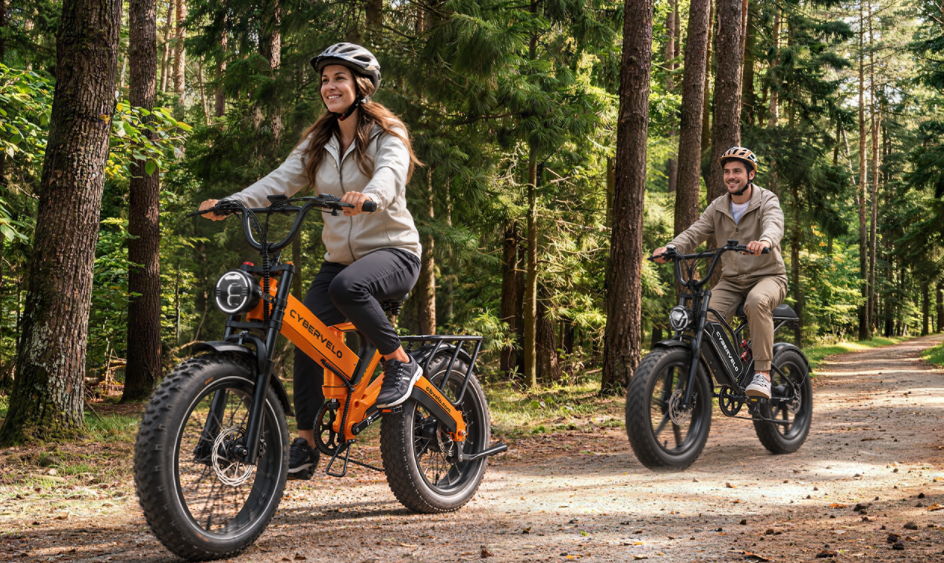
    As autumn settles in, cool breezes, fallen leaves, and crisp trail air make late fall the absolute best time for off-road e-bike riding. However, wet gravel, slick leaf cover, and sudden temperature drops demand a ride built with the right power, tire grip, and battery reliability.

    Choosing an off-road electric bike isn’t just about raw speed. Buyers often ask: Will the battery hold up in cold weather? Can it handle steep incline trails smoothly? Is a full suspension or a cargo-capable frame better for long trail trips?

    To help you clear through the confusion, we have evaluated four top-tier Cybervelo Electric Bikes. Below is a practical guide matching real-world riding scenarios with the ideal technical specs so you can choose with complete confidence.

    Matching E-Bike Features to Real Fall Off-Road Scenarios

    When riding late into the season, off-road terrain presents distinct challenges. Understanding how key specs translate into real-world performance will help you narrow down your choices quickly.

    Battery Capacity & Cold Weather Range

    Cold weather causes standard e-bike batteries to drain faster. For longer backcountry exploration where charging stations don’t exist, having a high-capacity setup (like a 48V 40AH or 60V 50AH pack) is non-negotiable.

    Suspension Systems & Wet Trail Safety

    Fallen leaves hide roots, rocks, and mud. A dual suspension fork combined with hydraulic disc brakes gives you full steering precision and reliable stopping power on slippery descents.

    Tire Size & Traction Control

    Fat tires (20×4.0 or 26×4.0 inches) offer a wider contact patch with the ground, lowering tire pressure options so you float over loose dirt, damp gravel, and mud rather than sliding around.

    Model Breakdown: Which Cybervelo Fits Your Riding Style?

    Whether you need ultra-fast torque, flexible trunk-storage options, budget-friendly trail utility, or a ride for two, here is how each model performs in real conditions.

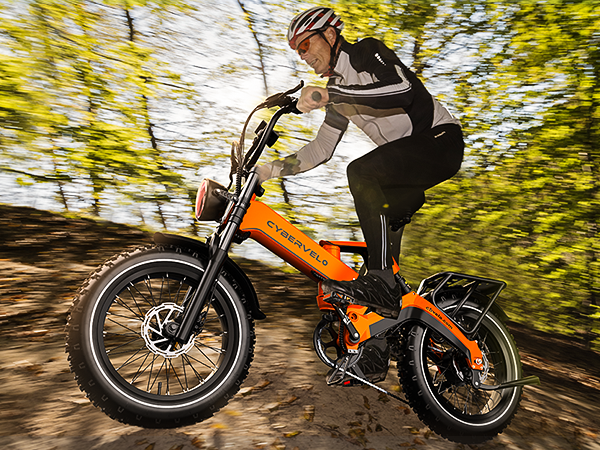
    Cybervelo EK6: The High-Powered Portable Explorer

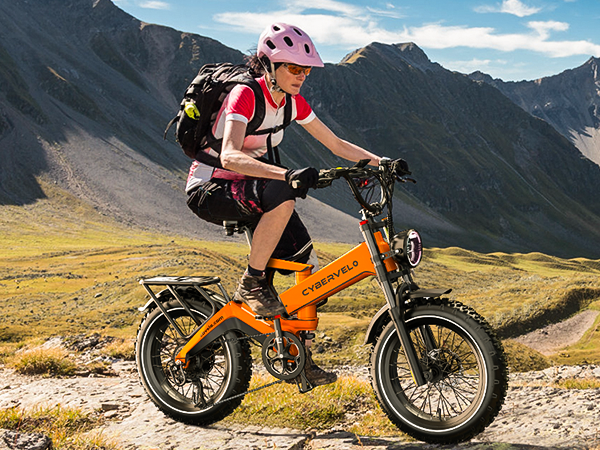
    If you want to pack your e-bike into an SUV trunk and drive out to mountain trails, the Cybervelo EK6 Folding Electric Bike delivers massive muscle in a compact format.

    Key Specifications:

    • Motor: 1500W High-Speed Motor | Top Speed: 40 MPH
    • Battery: 48V 40AH | Max Range: Up to 120 Miles
    • Wheel & Frame: 20×4.0 Fat Tires | Magnesium Alloy Foldable Frame
    • Braking & Gearing: Premium Hydraulic Disc Brakes | Shimano M315 8-Speed

    Best Used For: Riders who want raw climbing power and ultra-long range without sacrificing vehicular portability.

    Standout Feature: Full dual suspension coupled with puncture-resistant tires featuring reflective side strips for added low-light autumn safety.

    Cybervelo EK8: Light Trails & Practical Utility

    For riders who love gravel roads, forest paths, and weekend trips where extra gear is required, the Cybervelo EK8 offers high carbon steel durability at a very approachable point.

    Key Specifications:

    • Motor: 1000W Motor | Top Speed: 28 MPH
    • Battery: 48V 20AH | Max Range: Up to 80 Miles
    • Wheel & Frame: 20×4.0 Fat Tires | High Carbon Steel Frame

    Best Used For: Casual trail enthusiasts and commuters looking for a rugged, dependable setup.

    Standout Feature: Built-in frame shock absorption with rear basket mounting capabilities, making it ideal for hauling outdoor gear or camping equipment on light dirt paths.

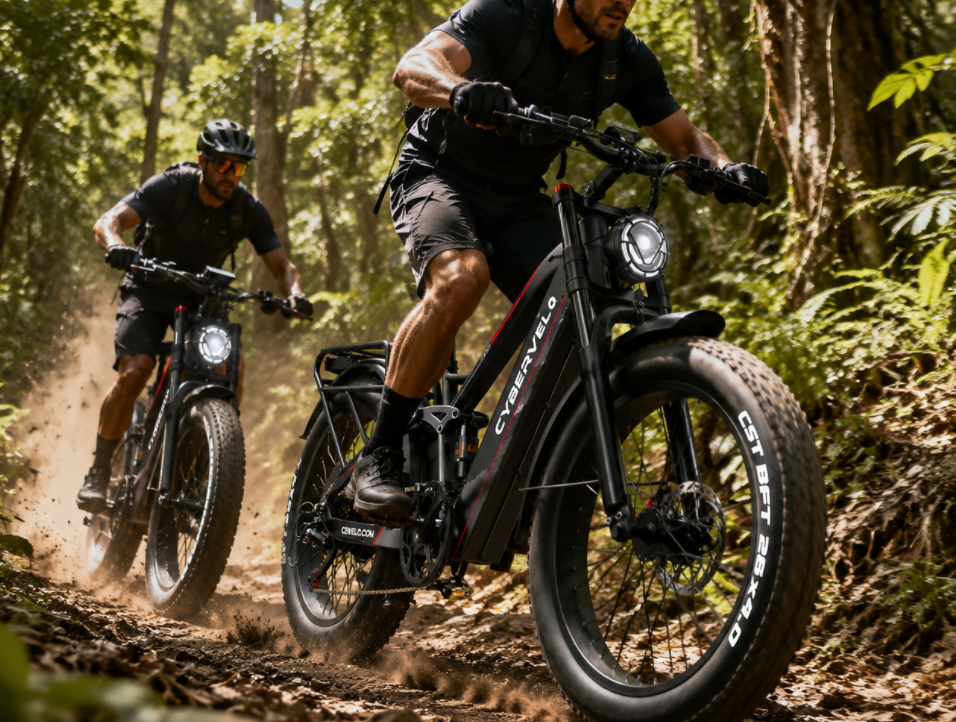
    Cybervelo EK9 (60V 50AH): Ultimate Performance & Extreme Off-Road Power

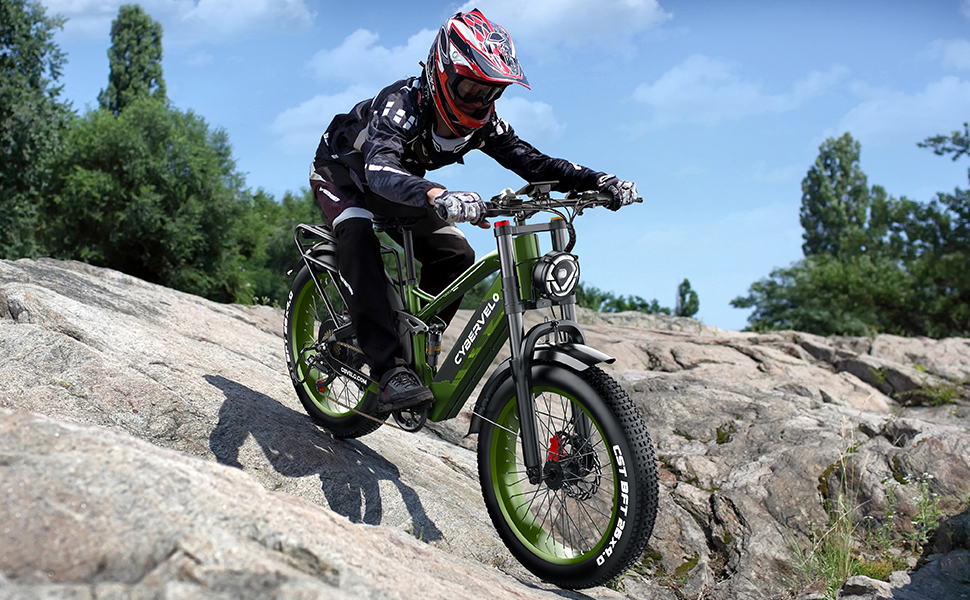
    When moderate power just won’t cut it, the heavy-duty Cybervelo EK9 stands as a true off-road monster designed for steep climbs and high-speed trail runs.

    Key Specifications:

    • Motor: 5000W Motor | Top Speed: 50 MPH | Torque: 120 N·m
    • Battery: Massive 60V 50AH Battery | Max Range: Up to 120 Miles
    • Wheel & Frame: Full-Size 26×4.0 Fat Tires | Aluminum Alloy
    • Braking & Suspension: TEKTRO & Logan 203mm Hydraulic Brakes | Dual Crown Adjustable Suspension Fork

    Best Used For: Advanced riders demanding top-tier hill-climbing torque and motorcycle-class responsiveness on rugged open terrain.

    Standout Feature: A huge color dashboard keeps all riding diagnostics visible even under bright daylight or muddy trail conditions.

    Cybervelo EK11: Comfort, Safety, and Tandem Capability

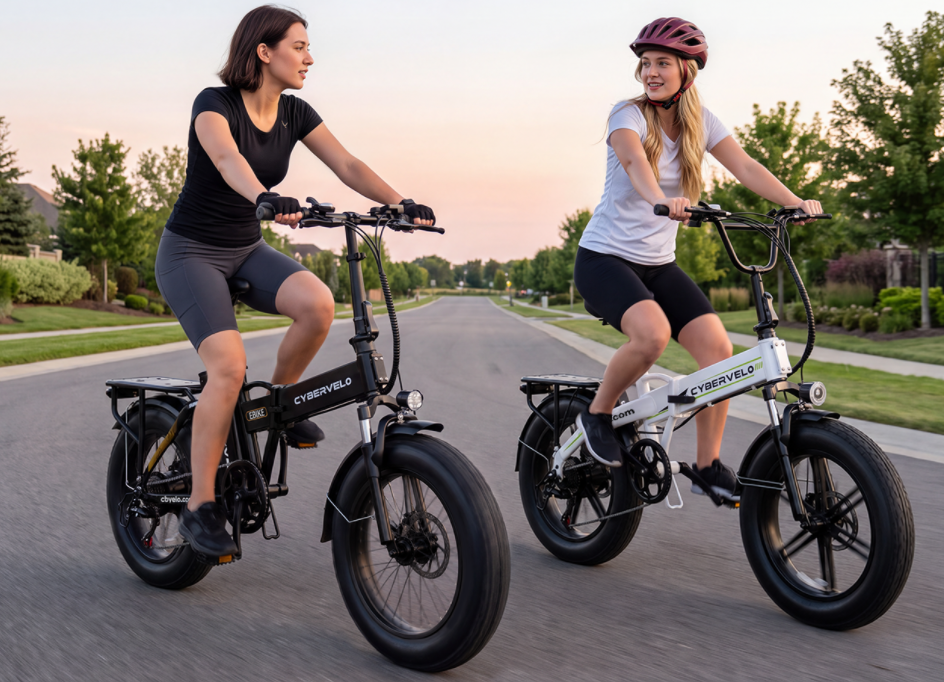
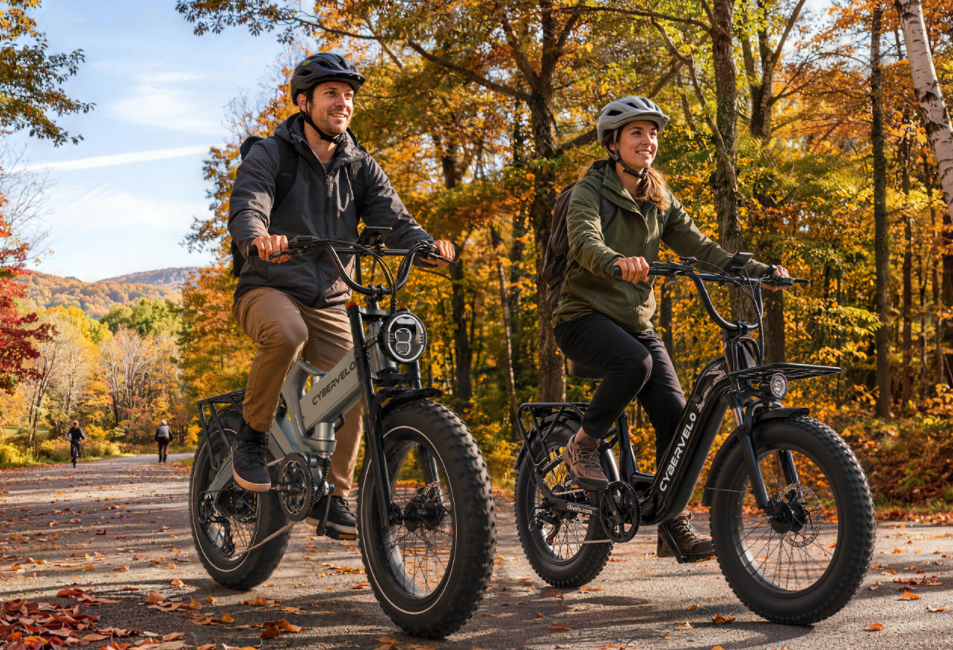
    If safety, night visibility, and riding together with a partner or child take priority, the versatile Cybervelo EK11 offers robust practical features.

    Key Specifications:

    • Motor: 1000W Motor | Top Speed: 28 MPH
    • Battery Options: 48V 20AH / 30AH | Max Range: Up to 80 Miles
    • Wheel & Frame: 20×4.0 Fat Tires | High Carbon Steel with One-Piece Magnesium Alloy Wheels

    Best Used For: Tandem riding, daily mixed commuting, and evening neighborhood or light-trail rides.

    Standout Feature: An extended comfort seat built to carry two passengers safely, backed by powerful front headlights, rear safety reflectors, and ultra-durable solid magnesium alloy wheels.

    Cybervelo Feature Comparison Overview

    ModelMotor PowerTop SpeedBattery CapacityMax RangeFrame & Wheel TypeKey Scenario Highlight
    EK61500W40 MPH48V 40AH120 MilesMagnesium Alloy (Folding)Trunk storage + long trail exploration
    EK81000W28 MPH48V 20AH80 MilesHigh Carbon SteelLight off-roading with gear rack options
    EK95000W50 MPH60V 50AH120 MilesAluminum Alloy (26×4.0)Steep mountain climbs & extreme off-road
    EK111000W28 MPH48V 20AH/30AH80 MilesHigh Carbon SteelTwo-person seating & evening safety

    Autumn Off-Road E-Bike Buyer’s FAQ

    How do I maintain my e-bike battery during cold fall weather?

    Cold temperatures temporarily lower lithium-ion battery efficiency. Always store and charge your battery indoors at room temperature before heading out on cold morning rides.

    Are hydraulic disc brakes really necessary for off-road trails?

    Yes. Cable-actuated mechanical brakes require much more hand lever effort and fade faster when wet. Hydraulic disc brakes (featured on models like the EK6 and EK9) give you immediate, smooth stopping power with minimal finger fatigue on long downhills.

    Should I choose 20×4.0 or 26×4.0 tires?

    20-inch fat tires lower the bike’s center of gravity, making it easier to control at slower speeds and far easier to fold or store. 26-inch fat tires roll over large rocks, roots, and trail obstacles with less effort, making them preferred for high-speed rough terrain.

    Final Buying Recommendation

    Preparing for late fall rides comes down to picking the right tool for your specific path:

    • Choose the EK6 if you need high performance and massive 120-mile range that easily folds into your vehicle.
    • Choose the EK8 if you want an affordable, practical entry into trail riding with rear rack expansion.
    • Choose the EK9 if you refuse to compromise on top speed, extreme torque (120 N·m), and serious mountain terrain capability.
    • Choose the EK11 if you want durable magnesium wheels, top-notch night lighting, and an extended seat to ride with a companion.

    Ready to hit the trails before winter sets in? Find your ideal setup today on the official Cybervelo E-Bike Catalog!
  • All-Terrain Riding and Commuting Fat Tire E-Bike Buying Guide

    All-Terrain Riding and Commuting Fat Tire E-Bike Buying Guide

    Choosing a fat tire electric bike often comes down to one fundamental question: do you need a compact, portable ride for off-road adventures, or a sturdy, multi-passenger commuter built for heavy daily use?

    Fat tire e-bikes have transformed from niche off-road machines into essential daily transport. The wide tires absorb bumps, handle sand or gravel effortlessly, and offer unmatched stability. However, with so many motor ratings, battery capacities, and frame designs available, picking the wrong model can mean dealing with a bike that is either too heavy to store or lacks the range you actually need.

    In this guide, we break down four standout models from Cybervelo, categorized by frame style and real-world usage, to help you make an informed decision.

    Foldable Fat Tire E-Bikes: Maximum Range and Portability

    Foldable e-bikes with fat tires solve two major headaches at once: off-road traction and easy storage. Whether you live in an apartment, plan to haul your bike in an SUV trunk, or need high power for hilly trails, a folding frame offers immense flexibility.

    The High-Power Long-Range Beast: Cybervelo EK6 Max

    If range anxiety and steep hills are your biggest concerns, the Cybervelo EK6 Max folding electric bike stands in a class of its own.

    Most folding bikes make sacrifices when it comes to power and range. The EK6 Max does the opposite. Equipped with a massive 48V 40AH battery and a 1500W high-speed motor, it reaches speeds up to 40 MPH and delivers an impressive max range of 120 miles on a single charge.

    Key Performance Highlights:

    • Frame & Tires: Lightweight magnesium alloy frame paired with $20 \times 4.0$ puncture-resistant tires featuring reflective strips for night safety.
    • Suspension & Braking: Full dual suspension system combined with premium hydraulic disc brakes for maximum stopping power at higher speeds.
    • Drivetrain: Shimano M315 8-speed trigger shifter for precise gear changes across varied terrain.

    Best Used For: Long-distance outdoor adventure riders, heavy-duty weekend explorers, and commuters who want high speeds without needing to recharge every night.

    The Agile Off-Road Cruiser: Cybervelo EK4

    For riders who want a maneuverable, lightweight folding setup that can still handle light off-roading, the Cybervelo EK4 folding fat tire ebike balances agility with practical performance.

    Built on a durable high carbon steel frame, the EK4 uses $20 \times 3.0$ tires—slightly narrower than traditional 4.0-inch fat tires. This reduces rolling resistance on asphalt while retaining enough surface grip for dirt trails and loose gravel.

    Key Performance Highlights:

    • Power & Range: Driven by a 1000W peak motor and a long-lasting 48V 50AH battery, achieving up to 28 MPH top speed and up to 80 miles of range.
    • Safety & Control: Dual disc brakes paired with a clear LCD display to track speed, trip distance, and battery health in real time.

    Best Used For: Mixed-surface commuters, light off-road enthusiasts, and anyone looking for a reliable, easy-to-fold setup for daily errands.

    Rigid Frame E-Bikes: Utility, Cargo, and Two-Rider Comfort

    If you don’t need to fold your bike for transport, rigid high-carbon steel frames offer enhanced structural rigidity, higher payload capacities, and comfortable riding positions for daily city transport or carrying cargo.

    The Two-Rider Commuter: Cybervelo EK11

    Carrying a passenger or hauling heavy gear requires a strong frame and dependable stability. The Cybervelo EK11 fat tire electric bike is designed specifically with heavy-duty utility in mind.

    Featuring an extended seat design, the EK11 comfortably accommodates two people. Its rigid high-carbon steel frame works alongside one-piece magnesium alloy wheels, eliminating the need for spoke adjustments and ensuring long service life under heavy loads.

    Key Performance Highlights:

    • Motor & Battery: Driven by a 1000W motor, pushing up to 28 MPH with battery options including 48V 20AH or 30AH (up to 80 miles range).
    • Comfort & Visibility: Front and rear shock absorbers smooth out rough pavement. A bright front headlight and rear safety reflectors provide clear night visibility.
    • Braking: Front and rear dual disc brakes deliver consistent, reliable stopping power under load.

    Best Used For: Couples, parents riding with teenagers, urban commuters, and riders who want a rugged, low-maintenance commuter bike.

    The Daily Utility & Cargo Runner: Cybervelo EK12 Step-Thru

    For riders focused on easy mounting, grocery runs, and daily errands, the Cybervelo EK12 step-thru ebike puts comfort and practical utility front and center.

    The step-thru frame design makes hopping on and off effortless—a huge benefit when carrying cargo or stopping frequently at city intersections. It comes engineered to support both front and rear baskets, converting the bike into a practical daily cargo vehicle.

    Key Performance Highlights:

    • Comfort Focus: Features larger, wider seat cushions paired with front and rear shock absorbers to minimize fatigue on longer rides.
    • Power Specs: Powered by a 1000W motor with a 48V 20AH battery, offering up to 28 MPH speeds and up to 80 miles of range.
    • Tires: Wide $20 \times 4.0$ fat tires give you complete confidence on wet streets, grass, or sandy trails.

    Best Used For: Daily delivery work, grocery trips, riders with mobility preferences who prefer low step-over heights, and casual leisure riders.

    Key Factors to Consider Before Buying

    When choosing between these models, match the technical specifications to your actual daily habits:

    • Storage vs. Frame Rigidity: If garage space is tight or you ride to different trails in a car trunk, choose the EK6 Max or EK4. If frame strength and cargo space matter more, opt for the EK11 or EK12.
    • Battery Capacity: Higher AH ratings mean fewer charges per week. If you hate charging frequently, the 40AH (EK6 Max) or 50AH (EK4) options provide massive capacity.
    • Terrain & Tire Width: True 4.0-inch tires excel on soft sand, mud, and snow. 3.0-inch tires roll slightly faster on city streets while maintaining off-road traction.

    Conclusion & Recommendations

    Finding the ideal fat tire e-bike comes down to how you plan to ride.

    • Choose the EK6 Max if you want top-tier power (1500W), high speeds (40 MPH), and long-distance capability (120 miles).
    • Choose the EK4 for an agile, lightweight folding option suited for light off-roading.
    • Choose the EK11 if you frequently carry a passenger or want extra structural strength.
    • Choose the EK12 Step-Thru for unmatched daily comfort, easy mounting, and utility basket storage.

    Evaluate your daily commute, check your local e-bike road regulations, and select the frame style that best fits your lifestyle.

  • How Should Choose a Suitable E-bike for Your First Road Trip?

    How Should Choose a Suitable E-bike for Your First Road Trip?

    Planning your very first long-distance road trip on two wheels is equal parts thrilling and intimidating. You get the freedom of the open road, the fresh breeze, and the ability to explore places cars just can’t reach. But if you’re relying on electric power, a standard commuter e-bike won’t cut it.

    The biggest hurdle for first-time road trippers isn’t fitness—it’s picking a setup that won’t leave you stranded with a dead battery halfway up a mountain pass. You need range, stability, comfort for hours in the saddle, and enough power to handle unexpected terrain.

    Here is a practical, realistic breakdown of what you actually need to consider before hitting the open road, along with how different builds handle real-world trip scenarios.

    The Core Road-Trip Requirements: What Actually Matters?

    When you’re miles away from the nearest charging point, shiny gimmicks don’t matter. Focus on these four non-negotiable factors when assessing an e-bike for long trips:

    • Battery Capacity & Real-World Range: Ignore “ideal condition” claims. Look for high-capacity setups (at least 20Ah to 50Ah). Windy days, heavy gear, and steep inclines will drain your power faster than expected.
    • Tire Volume & Suspension: Pavement turns into gravel, dirt, or cracked asphalt quickly. 4.0-inch fat tires combined with suspension absorb road chatter, preventing full-body fatigue after three hours of riding.
    • Motor Torque & Gradeability: A high-wattage motor isn’t just about speed; it’s about pushing through steep hills with a loaded rack without overheating.
    • Portability vs. Payload: Are you hauling the bike on a trunk rack, putting it inside an RV, or carrying a passenger? Frame structural design matters immensely.

    Choosing Your Ride: Matching the E-Bike to Your Trip Style

    Different trips require completely different tools. Below is how three distinct build types solve specific road-trip challenges, featuring real-world specs from the Cybervelo lineup.

    Scenario A: The RV, Camping & Compact Storage Trip

    If space inside your vehicle is tight, or you want maximum comfort and massive battery capacity in a compact footprint, a folding full-suspension model is ideal.

    The Cybervelo EK6 Max Folding Electric Bike is built specifically for this. It packs a heavy-duty 48V 40AH battery into a compact magnesium alloy frame, delivering up to 120 miles of max range.

    • Why it works on road trips: Its full dual suspension system handles unpredictable backcountry trails, while the 20×4.0 puncture-resistant tires with reflective strips keep you safe when twilight hits.
    • Key Specs: 1500W High-Speed Motor | 40 MPH Top Speed | Shimano M315 8-Speed Trigger Shifter | Hydraulic Disc Brakes.

    Scenario B: High-Speed, Long-Distance Highway & All-Terrain Touring

    For riders tackling long stretches of highway, steep canyon climbs, or rough off-road detours where raw power and maximum distance are non-negotiable.

    When you need serious muscle, the Cybervelo EK9 All-Terrain Electric Bike sits in a league of its own. Driven by a massive 60V 50AH battery and a 5000W motor churning out 120 N·m of torque, it effortlessly handles steep gradients and long road stretches.

    • Why it works on road trips: With a 150-mile range and a 50 MPH top speed, it covers distances that keep up with rural traffic flows. The dual-crown aluminum alloy suspension fork with lockout gives you rigid efficiency on smooth pavement and soft travel on rocky detours.
    • Key Specs: 26 x 4.0 Fat Tires | TEKTRO & Logan 203mm Hydraulic Brakes | Large Color Dashboard.

    Scenario C: Two-Up Riding & Budget-Friendly Exploration

    If you’re planning a trip with a partner or teenager on a single bike, payload capacity and frame durability become your top priorities.

    The Cybervelo EK11 Dual-Seat Electric Bike utilizes a high carbon steel frame designed with an extended saddle specifically made to carry two riders comfortably.

    • Why it works on road trips: Powered by a 1000W motor with up to 80 miles of range (30AH option), it features robust one-piece magnesium alloy wheels that eliminate broken spoke worries on heavy rides. Front and rear absorbers keep both riders comfortable over bumps.
    • Key Specs: 20×4 Fat Tires | Front & Rear Dual Disc Brakes | Bright Headlight & Rear Reflectors | Top Speed 28 MPH.

    Quick Feature Comparison for Road-Trippers

    ModelPrimary AdvantageBattery / RangeMotor PowerIdeal Road Trip Style
    EK6 MaxPortable, Dual Suspension48V 40AH / 120 Miles1500WRV Camping & Multi-Terrain Exploration
    EK9Extreme Power & Range60V 50AH / 150 Miles5000W (120 N·m)High-Speed Long Distance Touring
    EK11Two-Person Payload, Durable48V 30AH / 80 Miles1000WTwo-Up Coastal & City Scenic Cruises

    Practical Checklist Before You Set Off

    • Calculate Gear Weight: Rider weight plus camping gear affects your range. Always plan stops around 70% of your maximum stated battery range.
    • Check Your Brakes: Heavy fat-tire bikes loaded with gear require substantial stopping power. Ensure your hydraulic fluid or cable tensions are checked before departure.
    • Bring a Portable Charger: Verify if your campsite or roadside stops have standard AC outlets available for mid-day top-ups.

    Final Thoughts: Ready for the Open Road?

    Your first e-bike road trip shouldn’t be defined by battery anxiety or physical exhaustion. Choosing the right machine comes down to how you plan to travel:

    • Pick the EK6 Max if you need a foldable, highly cushioned ride to store in your vehicle.
    • Choose the EK9 if you want unmatched power, hill-climbing torque, and cross-country range.
    • Go with the EK11 if you’re riding double and need a rugged, reliable cruiser.

    Take time to map your route, inspect your tire pressures, and get out there. The road is waiting.

  • Best Off-Road Electric Bikes for Beginners

    Best Off-Road Electric Bikes for Beginners

    Taking your first steps into off-road riding is an adrenaline rush, but choosing the right electric bike can quickly feel overwhelming. With endless options on the market, beginner off-roaders often ask the same core questions: How much motor power do I actually need? Will the battery get me through long forest trails? How do I ensure maximum safety on steep, unpaved downhills?

    Whether you are navigating rocky forest paths, tackling steep climbs, or planning long-distance weekend adventures, matching your skill level with the right frame, suspension, and power output is crucial. In this guide, we break down what off-road beginners must consider before buying and match your specific riding style with three tailored choices from Cybervelo.

    Core Technical Factors Off-Road Beginners Must Look For

    When transitioning from smooth city streets to unpredictable dirt trails, standard commuter specs just will not cut it. Here is what truly matters when evaluating an off-road eBike:

    • Suspension & Frame Stability: Dirt trails mean bumps, roots, and rocks. A dual suspension system absorbs high-impact trail hits, keeping your tires grounded and protecting your back from sudden shocks.
    • Tire Traction & Width: Narrow city tires sink into soft soil and lose grip easily. Look for 20×4.0 fat tires; the wider surface area provides superior traction on loose gravel, sand, and mud.
    • Motor Torque vs. Top Speed: Off-road power is about hill-climbing capability, not just highway speed. A high-wattage motor gives you the instant torque needed to push up steep inclines without stalling.
    • Braking Reliability: Hydraulic disc brakes offer far greater stopping power with less hand fatigue compared to standard mechanical brakes, which is essential when descending steep dirt trails.

    Choosing Your Ideal Ride: Matching Cybervelo Models to Your Trail Style

    Every rider’s journey begins in a different place. Depending on whether you prioritize maximum trail endurance, light weekend exploration, or practical multi-passenger capability, here is how the top Cybervelo models align with your off-road goals.

    Option A: The Long-Range Trail Conqueror – Cybervelo EK6 Max

    If your goal is deep-woods exploration and long-distance backcountry adventures without range anxiety, the EK6 Max is engineered to deliver unmatched capability.

    • Extreme Endurance: Powered by a massive 48V 40AH battery, it achieves an impressive range of up to 120 miles on a single charge.
    • Uncompromising Off-Road Performance: Driven by a high-speed 1500W motor that tops out at 40 MPH, it easily climbs steep hills and covers rugged terrain effortlessly.
    • Trail Comfort & Safety: Features a full dual suspension system alongside premium hydraulic disc brakes, giving beginners complete control and maximum shock absorption over rough dirt tracks.
    • Portability & Build: Crafted with a lightweight magnesium alloy foldable frame and equipped with puncture-resistant fat tires with reflective strips, a Shimano M315 8-speed shifter, and an advanced LCD display.

    Option B: The Lightweight Trail Explorer – Cybervelo EK8

    For beginners who want a versatile, user-friendly entry point for casual off-roading, gravel trails, and weekend park trips, the EK8 delivers the perfect blend of performance and practical utility.

    • Balanced Power: Driven by a robust 1000W motor with a top speed of 28 MPH, giving you plenty of power for moderate hill climbs.
    • Solid Trail Range: The 48V 20AH battery provides up to 80 miles of range, making it ideal for day trips without frequent recharges.
    • Smooth Off-Road Handling: Built with a high carbon steel frame integrated with shock absorbers and 20×4.0 fat tires for steady grip on light off-road paths.
    • Practical Utility: Supports an optional rear basket installation, allowing you to easily haul camping gear, tools, or supplies on your trail runs.

    Option C: The Versatile Multi-Rider Trail Cruiser – Cybervelo EK11

    If you plan on sharing your trail adventures with a friend or need a ultra-durable ride built for heavy-duty stability, the EK11 stands out as a unique off-road contender.

    • Two-Person Riding Capability: Features an extended seat explicitly designed for carrying two people safely across dirt pathways.
    • Rugged Wheel Construction: Upgraded with one-piece magnesium alloy wheels that eliminate spoken damage on rough terrain, ensuring long service life and high durability.
    • Complete Trail Protection: Comes equipped with front and rear shock absorbers, high-performance dual disc brakes, an ultra-bright front headlight for night visibility, and rear reflectors for extra trail safety.
    • Flexible Performance: Powered by a 1000W motor reaching 28 MPH and up to 80 miles range (available in 48V 20AH or 30AH configurations).

    Off-Road Comparison Overview

    Feature / ModelCybervelo EK6 MaxCybervelo EK8Cybervelo EK11
    Primary Use CaseExtreme Trails & Long RangeLight Off-Roading & UtilityDual-Rider Trails & Heavy Duty
    Motor Power1500W High-Speed1000W1000W
    Max RangeUp to 120 MilesUp to 80 MilesUp to 80 Miles
    Top Speed40 MPH28 MPH28 MPH
    BrakesPremium Hydraulic Disc BrakesDisc BrakesFront & Rear Dual Disc Brakes
    Frame MaterialMagnesium Alloy (Foldable)High Carbon SteelHigh Carbon Steel
    Special HighlightFull Dual Suspension & 40AH BatteryRear Basket CompatibilityExtended Two-Person Seat

    Off-Road eBike FAQs for Beginners

    Q: Do I really need 20×4.0 fat tires for off-road riding?

    A: Yes. Fat tires allow you to run lower tire pressure, which significantly increases the tire’s contact patch with the ground. This provides essential traction on loose soil, sand, and slippery gravel, making control much easier for beginners.

    Q: How do I maintain my eBike battery after off-road rides?

    A: Always let your battery cool down before charging, especially after long trail sessions. Avoid storing the battery in direct sunlight or extreme cold, and keep it charged between 30% and 80% if storing for extended periods.

    Q: Is hydraulic braking superior to mechanical braking on dirt roads?

    A: Absolutely. Hydraulic disc brakes require far less lever force to achieve maximum stopping power, giving you precise single-finger braking control during steep downhills or sudden off-road stops.

    Conclusion: Start Your Off-Road Journey Today

    Choosing the right off-road eBike comes down to understanding where you want to ride and how far you want to go. If you demand peak speed, maximum range, and top-tier suspension for rugged terrain, the long-range EK6 Max is your ultimate setup. For those looking for a practical, light off-road daily adventurer, the EK8 offers unbeatable value. And if bringing a partner along for the ride is top priority, the robust EK11 is built to deliver.

    Ready to hit the trails with confidence? Explore Cybervelo’s complete lineup of high-performance off-road electric bikes today and take your riding adventures to the next level.

  • Fat Tire E-Bike Maintenance Guide: How to Extend Battery & Tire Life

    Fat Tire E-Bike Maintenance Guide: How to Extend Battery & Tire Life

    Fat tire e-bikes have transformed how we tackle rough trails, steep inclines, and daily commutes. With massive traction and substantial motor power, these machines carry you through snow, sand, and mud without breaking a sweat. However, heavy-duty electronics and extra-wide tires require consistent care. Without a solid maintenance routine, critical components like your battery, hydraulic brakes, and high-torque drivetrain will wear out prematurely.

    Whether you commute through harsh weather or push high-speed off-roaders to their limits, proactive maintenance protects your investment and ensures every ride remains smooth and safe. Here is a practical guide on how to service every major system on your fat tire electric bike.

    Battery Care: Maximizing Capacity and Lifespan

    Your battery is the single most expensive component on an e-bike. Proper care direct impacts your daily range and long-term battery health.

    • Smart Charging Habits: Never leave your battery completely drained for extended periods. Keep your charge levels between 20% and 80% during regular use to prevent premature degradation of lithium-ion cells.
    • Temperature Management: Extreme cold slows chemical reactions, reducing temporary range, while extreme heat permanently degrades cell health. Store and charge your battery in a dry, climate-controlled space between 50°F and 70°F (10°C to 21°C).
    • High-Capacity Systems Require Extra Attention: Massive power setups—such as the massive 60V 50AH battery found on the high-speed Cybervelo EK9—demand stable, moisture-free storage environments. Because higher voltage and capacity packs generate more heat during heavy draws, always let the battery cool down for 20 minutes after high-speed runs before plugging in the charger.

    Fat Tire Pressure & Tread Maintenance

    Fat tires (typically 4.0 inches wide) provide unmatched stability and cushion, but running incorrect pressure accelerates wear and reduces motor efficiency.

    • Match PSI to Terrain: For loose sand or snow, lower your pressure to 8–12 PSI for maximum footprint and traction. For high-speed street riding or long-distance cruising, bump it up to 18–22 PSI to reduce rolling resistance and preserve battery life.
    • Inspect Tread and Sidewalls Regularly: Low-pressure riding increases the risk of pinch flats and sidewall abrasion. Check weekly for embedded glass, thorns, or small metal debris.
    • Choose Durable Tire Compounds: High-performance fat tires often feature built-in protection. Models like the Cybervelo EK6 MAX, which features puncture-resistant tires with reflective strips, reduce the risk of unexpected flats during night commutes while improving lateral visibility.

    High-Performance Brake Maintenance

    Fat tire e-bikes carry significantly more weight and momentum than traditional bicycles. Stopping from higher speeds requires well-maintained braking systems.

    • Monitor Pad Thickness: Check your brake pads every 200–300 miles. Replace them immediately if the friction material drops below 1.5mm. Contaminated pads lead to noise and severe power loss; clean your rotors only with isopropyl alcohol.
    • Hydraulic System Flushing: High-speed e-bikes generate intense heat during heavy downhill braking. Hydraulic fluids degrade over time and absorb moisture, resulting in a spongy lever feel. Bleed your lines annually to maintain crisp lever actuation.
    • Handling Massive Stopping Needs: Ultra-fast e-bikes require heavy-duty braking components. For example, high-output powerhouses pushing 50MPH demand top-tier hydraulic setups like the TEKTRO hydraulic brake and Logan 203mm rotors equipped on the EK9. Ensure those large 203mm rotors remain free of warpage and oil contamination.

    Frame Care, Suspension, and Drive Chain Cleaning

    A dirty drive chain or neglected suspension system drains motor power and shortens component life.

    • Chain Lube Routine: Clean and lube your chain every 100 miles, or after any wet ride. Use dry lube for dusty trails and wet lube for rainy conditions. Wipe off excess lube to avoid attracting grit, which acts like sandpaper inside your chain links.
    • Suspension Seal Care: Wipe down front fork stanchions and rear shocks after dusty rides to keep dirt out of the internal seals.
    • Mind Frame Stress Points: High-torque motors stress frames at shock mounts, dropouts, and folding hinges. Inspect structural joints regularly for cracks or loose hardware. Long-duty commuter setups—like the double-rider extended seat layout on the high-carbon steel Cybervelo EK11—benefit from routine torque checks on all frame bolts, wheel mounts, and footpegs to handle extra passenger weight safely.

    Summary & Next Steps

    Maintaining a fat tire e-bike comes down to regular, proactive care: keep your battery stored at moderate temperatures, match your tire pressure to your riding surface, keep your hydraulic brakes clean, and inspect your frame hardware regularly. Spending ten minutes on maintenance every few weeks will save you hundreds of dollars in repair costs down the road.

    If you are looking for a reliable, heavy-duty fat tire e-bike built with premium hydraulic brakes, robust suspension setups, and long-range battery options, explore the full range of high-performance models at Cybervelo.

  • What Makes a High-Performance Commuter E-Bike?

    What Makes a High-Performance Commuter E-Bike?

    City commuting isn’t what it used to be. Gridlock traffic, rising fuel prices, and packed public transit have forced everyday riders to look for smarter ways to move. Enter the high-performance commuter electric bike—a practical machine built to make your morning ride faster, cleaner, and a lot less stressful.

    However, shopping for an e-bike quickly turns confusing. You see terms like peak wattage, frame geometry, and amp-hours thrown around without much context. What actually turns a basic electric bicycle into a reliable, high-performance daily commuter?

    In this guide, we break down the key features that matter for real-world riding and compare three distinct setups to help you land the exact match for your lifestyle.

    Power and Speed: Tackling Hills Without Breaking a Sweat

    If your daily commute involves steep inclines or long stretches of open road, power isn’t a luxury—it’s a safety requirement. Being able to keep up with city traffic flow reduces dangerous pass-bys by motor vehicles.

    A truly high-performance commuter requires a robust powertrain. Look for motors capable of delivering up to 1000W peak power. This output gives you the torque needed to launch smoothly from a complete stop at traffic lights and pull uphill without bogging down.

    Speed matters just as much for long-distance commuters. A top speed of 28 MPH allows you to clear miles quickly on wide bike lanes, cutting down your travel time significantly compared to standard pedal-assist models.

    COMMUTER PERFORMANCE CHECKLIST
    Key FeatureWhy It Matters for Daily Riders
    1000W Motor PowerEssential for hill climbing and quick acceleration
    28 MPH Top SpeedReduces travel time on long suburban routes
    80-Mile Battery RangeEliminates daily range anxiety and frequent charging
    Mechanical/Disc BrakesProvides reliable stopping power in wet weather

    Range Confidence: Ending the Daily Charging Hassle

    Range anxiety is real. Nothing ruins a workday faster than keeping one eye on a dying battery indicator.

    For a daily commuter bike, you want a minimum realistic maximum range of up to 80 miles per charge. Having a larger energy capacity—such as a 48V 720WH or a heavy-duty 48V 50AH setup—means you don’t have to plug in every single night. It also gives you a safety buffer for headwinds, payload carrying, and unexpected detours.

    An integrated LCD display is equally crucial here. It provides real-time feedback on battery percentage, speed, and trip distance, allowing you to manage your pedal-assist levels intelligently throughout the week.

    Frame Design and Riding Geometry: Step-Through vs. Step-Over

    Frame geometry directly impacts your daily comfort. A bike can have all the power in the world, but if it hurts your back after three miles, it will sit in your garage.

    Easy Access: Step-Through Comfort

    If you commute in work clothes, wear longer coats, or frequently stop at city intersections, a step-through frame makes mounting effortless.

    The Cybervelo EK2 Step-Through Ebike combines an accessible low-step high carbon steel frame with full-sized performance. Running on 26×1.95 tires, a 1000W motor, and a 48V 720WH battery, it reaches up to 28MPH with an 80-mile max range. Its large frame size and clear LCD display make it an exceptionally comfortable cruiser for daily city navigation.

    Classic Feel: Step-Over Utility

    Riders who prefer traditional diamond frames often favor step-over models for their familiar aesthetic and solid handling feel.

    The Cybervelo EK3 Step-Over Ebike offers that classic riding posture backed by serious hardware. Built around a durable high carbon steel chassis, it pairs 26×1.95 tires with a 1000W motor to hit 28MPH. With up to an 80-mile range and an easy-to-read LCD display, it fits commuters who want a large, commanding presence on suburban roads.

    Storage & Terrain Flexibility: The Folding Advantage

    Not all commuters have a private garage or a dedicated bike storage room. If you live in an apartment, need to haul your bike inside an elevator, or enjoy taking weekend shortcuts through gravel trails, standard frame sizes might present a storage challenge.

    This is where compact, fat-tire folding designs come into play.

    CYBERVELO EK4 HIGHLIGHTS
    Foldable & space-saving chassis
    20×3.0 tires for light off-road
    Massive 48V 50AH battery unit
    1000W Peak motor & disc brakes

    For maximum versatility, the Cybervelo EK4 Folding Fat Tire Electric Bike brings together portablity and traction. Featuring 20×3.0 fat tires, a high carbon steel frame, and disc brakes, it tackles smooth asphalt as easily as light off-road paths. Powered by a 1000W peak motor and a massive 48V 50AH battery, it delivers 28MPH speeds and an 80-mile max range in a space-saving, foldable format.

    Buyer’s Guide: Matching the E-Bike to Your Commute

    To narrow down your choice, evaluate your daily route against these three common commuting profiles:

    • The Urban Stop-and-Go Rider: If your route involves frequent traffic lights, relaxed riding attire, and paved streets, prioritize a step-through geometry like the EK2. The easy mounting and 26-inch smooth-rolling tires reduce fatigue.
    • The Suburban Long-Distance Commuter: If you ride long open stretches and prefer a traditional bike frame posture, a step-over setup like the EK3 gives you a stable, classic feel at high speeds.
    • The Mixed-Terrain & Small-Space Rider: If you need to store your bike in a tight hallway, throw it into a car trunk, or ride across loose gravel and dirt paths on weekends, a folding fat-tire option like the EK4 offers the ideal balance of traction and footprint.

    Frequently Asked Questions

    Are 1000W e-bikes suitable for daily city commuting?

    Yes. A 1000W motor provides necessary torque when climbing steep hills or accelerating from stops. It ensures the motor operates under less strain, which extends components’ overall lifespan.

    How do fat tires help on a urban commute?

    Wider tires (such as 20×3.0 setups) absorb road vibration, handle potholes better, and offer increased grip on wet pavement or loose debris compared to narrow road tires.

    How often do I need to charge an 80-mile range battery?

    For an average 10-to-15-mile daily round-trip commute, an 80-mile range capacity allows you to ride for a full workweek on a single charge, minimizing battery strain.

    Summary: Upgrade Your Daily Ride

    A high-performance commuter e-bike isn’t just transportation—it’s an investment in reclaiming your personal time. When choosing your ideal model, focus on motor reliability, battery range, frame comfort, and storage requirements.

    Whether you need the easy clearance of a step-through frame, the classic setup of a step-over, or the space-saving convenience of a folding fat-tire bike, matching your ride to your environment makes all the difference.

    Ready to transform your daily commute? Explore full specifications and find your perfect ride at Cybervelo.

  • How Much Motor Power Do You Need for a Fat Tire E-bike?

    How Much Motor Power Do You Need for a Fat Tire E-bike?

    Buying a fat tire electric bike is exciting, but browsing specifications often leads to one confusing question: How much motor power is actually enough?

    If you get a motor that is underpowered, your heavy fat tires will feel sluggish on steep hills and off-road trails. On the flip side, overspending on unnecessary wattage might leave you with a bike that is heavier and more powerful than your riding environment demands.

    Whether you need a agile daily commuter, a trail-ready monster, or an adrenaline-pumping off-road beast, this guide breaks down real-world power requirements to help you choose the exact motor size for your riding style.

    Why Motor Power Matters More on Fat Tire E-Bikes

    Fat tires (typically 3.0 inches to 4.0 inches wide) offer incredible stability, traction, and comfort across sand, snow, mud, and gravel. However, that extra wide contact patch creates significantly more rolling resistance compared to standard bicycle tires.

    To turn those beefy tires effortlessly—especially when dead-stopped at an incline—you need a electric motor capable of delivering high wattage and sustained torque. Motor power in e-bikes isn’t just about pure top speed; it directly impacts:

    • Hill-climbing capacity without overheating the system.
    • Acceleration response when hauling gear or tackling loose soil.
    • Battery efficiency relative to rider and frame weight.

    Let’s examine how different motor power tiers perform in real life using three engineered balance points.

    1000W Peak Power – The Versatile Utility & Light Trail Setup

    If your ideal ride involves urban commuting, occasional dirt roads, camping trips, and a need for easy storage, a 1000W peak motor hits the perfect sweet spot.

    At this power level, the motor handles wider 3.0-inch tires seamlessly without adding excessive bulk to the frame structure.

    Real-World Application: Everyday Commuting & Light Off-Roading

    A motor delivering up to 1000W peak output provides punchy acceleration up to 28 MPH while maintaining manageable power consumption. When paired with a robust high-carbon steel frame and a high-capacity 48V 50AH battery setup, it yields a massive range up to 80 miles.

    For instance, the Cybervelo EK4 Folding Fat Tire Electric Bike utilizes this exact motor tier. Its lightweight 20×3.0 fat tire setup combined with an intuitive LCD display and reliable disc brakes makes it an ideal portable daily driver that can handle paved streets and unexpected gravel detours with total ease.

    • Best For: Commuters, suburban explorers, campers needing foldability, and riders wanting long battery range over extreme speed.

    1500W High-Speed Motor – All-Terrain & Steep Incline Master

    When you transition from paved paths to aggressive dirt tracks, muddy inclines, and longer high-speed runs, 1000W may leave you wishing for extra torque reserve. This is where a 1500W high-speed motor shines.

    Real-World Application: Rough Trails & Serious Off-Roading

    A 1500W high-speed motor paired with a 48V system propels 20×4.0 fat tires up to 40 MPH with impressive throttle response. Wide 4.0-inch tires need extra motor output to maintain momentum over rocks, sand, and steep inclines.

    Look at the hardware on the Cybervelo EK6 Max Folding Electric Bike. To support a high-output 1500W motor, it incorporates a magnesium alloy frame, a full dual suspension system, and premium hydraulic disc brakes to ensure complete stopping control at high speeds. Features like the Shimano M315 8-speed shifter and puncture-resistant tires with reflective strips make this power class a rugged, worry-free option for tough environments.

    • Best For: Off-road enthusiasts, riders dealing with steep hills daily, and users seeking higher top speeds with plush dual suspension.

    5000W Extreme Power – The Pure Off-Road Beast

    For adrenaline seekers who want speed and torque that rivals light dirt motorcycles, high-wattage systems above 3000W represent an entirely different beast. A massive 5000W motor operates beyond standard bicycle speed classes.

    Real-World Application: Extreme Performance & Unmatched Torque

    When equipped with a 5000W power core running on a 60V 50AH system, an e-bike can hit top speeds up to 50 MPH and crank out an incredible 120 N·m of torque. This amount of raw power turns loose gravel, steep mountain climbs, and rugged trails into smooth playgrounds.

    Vehicles built for this wattage require serious industrial components. For example, the Cybervelo EK9 2.0 Electric Bike pairs its 5000W output with massive 26×4.0 fat tires, an aluminum alloy frame, and a dual-crown front suspension fork with lockout adjustment. To safely control this level of power, it features high-grade TEKTRO and Logan 203mm hydraulic brakes, giving you instantaneous stopping capability alongside a large color dashboard monitoring real-time metrics.

    • Best For: Advanced riders, extreme off-road enthusiasts, private land riding, and thrill-seekers demanding motorcycle-grade performance.

    Buying Advice: How to Select Your Ideal Motor Power

    Before adding an e-bike to your cart, ask yourself these three critical practical questions:

    What is your primary terrain?

      If you spend 80% of your time on paved streets or packed dirt, a 1000W motor offers plenty of power while staying lightweight and maneuverable. If you frequently encounter loose sand, deep mud, or heavy mountain inclines, lean toward 1500W or higher.

      How important is transportability?

        Higher wattage motors require bigger batteries and heavier suspension frames. If space is tight in your apartment or car trunk, choosing a compact folding frame with a 1000W or 1500W setup will make your life much easier.

        Are your safety components matched to your power?

        Never buy high wattage without high-tier stopping power. Any motor pushing past 25-30 MPH should ideally be backed by hydraulic disc brakes and robust suspension to ensure a safe, controllable ride.

        Final Thoughts: Choose Balance Over Pure Numbers

        More power is always exciting, but the best fat tire electric bike is the one balanced for your lifestyle. Match your motor size with your local laws, terrain needs, and storage space to get the ultimate riding experience.

        Ready to explore your options? Check out the full line of high-performance electric bikes at Cybervelo to find the perfect ride for your next journey.

      1. Desert Rocks and Soft Sand: What Type of E-Bike Do You Need for Off-Road Riding?

        Desert Rocks and Soft Sand: What Type of E-Bike Do You Need for Off-Road Riding?

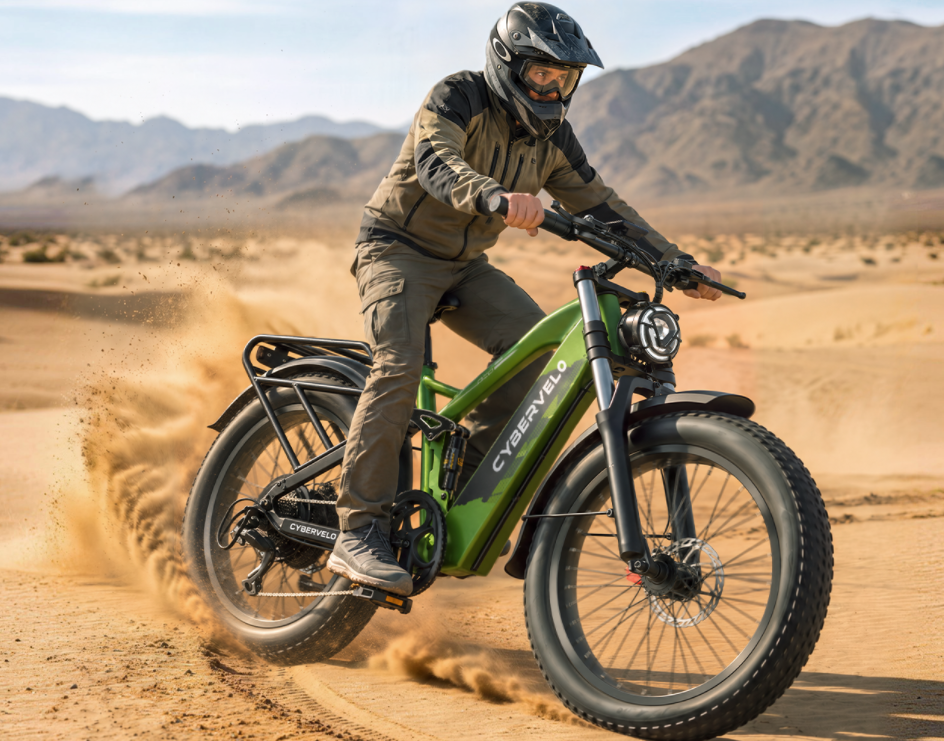
        If you’ve ever taken a standard e-bike into desert trails or rocky canyons, you already know the harsh truth: most electric bikes just can’t handle it. Loose sand steals your traction, steep rocky inclines overheat weak motors, and cheap brakes leave you sweating on every descent.

        Desert off-roading isn’t just about going fast. It’s about high torque to push through soft terrain, massive battery capacity so you don’t get stranded in the wild, and heavy-duty suspension to absorb brutal hits.

        If you are looking for an off-road beast built specifically for loose terrain and tough canyon trails, let’s look at what features actually matter—and why high-performance models like the Cybervelo EK9 are changing the game for desert riders.

        Key Features You Need for Sand and Rocky Terrains

        Riding in extreme environments requires more than basic specs. Here is a realistic breakdown of what your bike needs before you head out into the backcountry.

        1. Instant Torque Over Top Speed

        Deep sand acts like a magnet for your tires. The moment you lose momentum, your tires dig in, and you’re stuck. While a high top speed is great on paved roads, desert trails demand massive low-end torque. A monster motor delivering 120 N·m of torque lets you punch through soft sand patches and climb loose gravel inclines without stalling out.

        2. Extra-Wide Fat Tires for Flotation

        Standard tires bite into rocks and sink into sand. To conquer desert trails, 26 x 4.0 fat tires are an absolute necessity. The larger contact patch spreads your weight out, allowing the bike to “float” over soft terrain rather than digging a hole.

        3. Battery Range That Prevents Backcountry Stranding

        Riding on sand consumes almost double the battery power compared to smooth pavement. A small 10Ah or 15Ah battery will drain in a flash under high load. A 60V 50AH battery setup provides the massive energy reservoir needed to deliver up to 120 miles of range, giving you full confidence to explore deep off-road trails without range anxiety.

        4. Heavy-Duty Hydraulic Braking

        Coming down a steep, rocky trail demands precise stopping power. Mechanical disc brakes simply lose performance under heat and heavy strain. Look for dual hydraulic setups, such as TEKTRO or Logan 203mm hydraulic brakes, which provide immediate, heat-resistant stopping power when maneuvering down tricky terrain.

        5. Adjustable Front Suspension

        Rocks, roots, and uneven washboard paths can ruin a ride quickly. A dual crown aluminum alloy suspension fork with lockout and adjustment allows you to fine-tune your stiffness depending on the ground—lock it out for smooth flats or soften it up to soak up harsh rocky impacts.

        The Desert Trail Champion: Cybervelo EK9 2.0

        When matching these tough requirements with current market offerings, the Cybervelo EK9 2.0 stands out as a purpose-built machine for extreme environments.

        CYBERVELO EK9 2.0 SPECS
        Motor Power5000W Peak / 120 N·m Torque
        Battery60V 50AH
        Top SpeedUp to 50 MPH
        Max RangeUp to 120 Miles
        Tires26 x 4.0 Off-Road Fat Tires
        BrakesTEKTRO / Logan 203mm Hydraulic Brakes
        SuspensionAdjustable Dual Crown Aluminum Alloy Fork
        DisplayLarge Color Dashboard

        With its rugged aluminum alloy frame and massive 5000W motor, the EK9 delivers instantaneous power to clear steep ascents and deep washouts. The high-contrast color dashboard keeps your vital stats clearly visible even under direct, harsh desert sunlight.

        If you are exploring different riding styles or looking for versatile electric rides, you can browse the full lineup at the Cybervelo electric bike selection.

        Real-World Buyer Advice for Off-Road Riding

        Before buying your next off-road e-bike, keep these quick practical tips in mind:

        • Air Pressure Matters: Lower your tire pressure slightly (around 10-15 PSI) when entering deep sand sections to maximize tread contact, then pump it back up for hard-packed dirt.
        • Monitor Heat Levels: Extended full-throttle pushes in heavy sand generate heat. Keep an eye on your dashboard stats during hot afternoon rides.
        • Invest in Safety: High-torque, high-speed machines belong on off-road trails and open lands. Always wear a full-face helmet and full protective gear.

        Final Thoughts

        Desert and rocky trails don’t forgive weak hardware. If you want to ride confidently off the beaten path, prioritize high torque, large battery capacity, and massive fat tires over basic commuter features.

        Ready to upgrade your off-road experience? Check out the full specs and rider reviews for the Cybervelo EK9 2.0 today and take on the rough terrain with total confidence.

      2. Fat Tire E-Bike vs Traditional Bike: Which Ride is Right for You?

        Fat Tire E-Bike vs Traditional Bike: Which Ride is Right for You?

        Riding a traditional bike used to be simple: you pedal, you sweat, and you get to your destination. But if you’ve ever tried pushing a narrow road bike through loose gravel, wet city potholes, or beach sand, you know the struggle. That is precisely why fat tire electric bikes have surged in popularity over the past few years.

        If you are torn between upgrading to an all-terrain fat tire e-bike or sticking with your faithful classic bicycle, you are not alone. Let’s break down the actual riding feel, practical trade-offs, and how to choose the right setup for your daily routine.

        The Real Difference: How It Actually Feels to Ride

        Forget technical specs for a moment. How do these bikes actually feel under real-world conditions?

        1. Traction & Stability: Floating vs. Digging In

        A standard bicycle tire typically ranges from 1.2 to 2.0 inches in width. On clean pavement, it feels fast and nimble. However, when you hit sand, light mud, or rain-slicked tarmac, those thin tires tend to slice through the surface, leading to skidding or sudden loss of balance.

        In contrast, fat tires (usually 3.0 inches or wider) run at lower air pressures (around 15–20 PSI). This creates a much larger contact patch with the ground. Instead of sinking into soft surfaces, a fat tire floats over them. You get incredible cornering confidence, effortless traction on wet pavement, and zero anxiety when crossing streetcar tracks or packed dirt trails.

        2. Comfort: Built-in Air Suspension

        If you’ve ever ridden a traditional rigid bike over cobblestones or cracked pavement, you know every single vibration goes straight up your spine.

        Fat tires act as natural shock absorbers. The high volume of air cushions your ride long before any mechanical suspension kicks in. When you combine wide tires with pedal assist, long rides suddenly feel relaxing rather than exhausting.

        3. Effort & Range: The E-Motor Game Changer

        The biggest drawback of a traditional non-electric fat bike is weight. Pedaling 4.0-inch wide tires uphill purely on human power feels like wearing heavy boots in a sprint.

        This is where electric power changes the equation entirely. With hub motors and pedal assist, the extra rolling resistance of a fat tire vanishes. You get all the comfort and stability without the physical burnout.

        Finding Your Sweet Spot: 3.0 vs. 4.0 Fat Tire E-Bikes

        Not all fat tires are created equal. Depending on whether you prioritize urban agility or rugged off-road capability, tire width matters significantly.

        The Versatile All-Rounder (3.0-Inch Width)

        If your daily routine involves city commuting, dodging traffic, carrying groceries, and occasionally heading out for weekend light trail rides, a 3.0-inch tire width hits the perfect sweet spot. It offers noticeable shock absorption over standard tires without adding excessive bulk.

        For riders seeking an agile commute with easy storage, the Cybervelo EK4 Folding Fat Tire Electric Bike is an ideal match. Featuring versatile 20×3.0 tires, it pairs all-terrain stability with a smart folding frame—making it smooth to ride in tight city lanes and effortless to stow in a car trunk or apartment corner.

        The Ultimate Heavy-Duty Cruiser (4.0-Inch Width)

        If you regularly encounter deep gravel, snow, beach sand, or steep unpaved trails, 4.0 inches is the gold standard for full terrain control. It delivers maximum stability and a cushioned ride that feels almost like floating on air.

        When stability and maximum comfort are top priorities, check out the Cybervelo EK6 Folding Electric Bike. Built with extra-wide 20×4.0 tires, this model provides uncompromised traction across uneven grounds while retaining folding convenience for easy travel and storage.

        Quick Buyer’s Checklist: Which One Should You Get?

        Ask yourself these three practical questions before making a decision:

        • Where do you ride most?
        • If 90% of your route is paved city road with occasional bumps, a 20×3.0 setup like the EK4 keeps your ride nimble yet comfortable. If you plan to tackle sand, snow, or rough backcountry paths, go straight to a 20×4.0 model like the EK6.
        • How important is storage and transport?
        • Both folding options save space, but 3.0-inch tire models are slightly lighter and easier to fold repeatedly for daily transit.
        • What is your comfort preference?
        • If you have lower back stiffness or simply prefer a plush, couch-like ride on every bump, wider tires at lower pressure are your best friend.

        Summary

        Traditional bicycles will always have a place for pure sports performance and lightweight minimalism. But for daily utility, year-round commuting, and stress-free weekend adventures, fat tire e-bikes offer superior safety, comfort, and fun.

        Ready to upgrade your daily commute or weekend escapes? Explore the complete specs and current deals on the Cybervelo EK4 (20×3.0) and Cybervelo EK6 (20×4.0) to find the perfect ride for your lifestyle.

      3. Choosing Your Off-Road Beast: 48V or 60V Fat Tire E-Bike?

        Choosing Your Off-Road Beast: 48V or 60V Fat Tire E-Bike?

        If you have spent any time looking at high-performance fat tire electric bikes, you know that raw power and battery spec numbers often dominate the spec sheets. But when you are choosing between a 48V and a 60V platform, the decision goes way beyond simple electric jargon. It comes down to where you ride, how steep the terrain gets, and how much range you actually need when you are miles away from the nearest wall outlet.

        Fat tires demand serious torque. Rolling over loose sand, mud, snow, or steep mountain trails creates constant resistance. A standard commuter setup just won’t cut it.

        So, should you stick with the industry-standard 48V ecosystem, or do you step up to a heavy-duty 60V setup? Let’s break down what these differences actually mean on the trail, how they affect motor pairings, and which setup aligns with your real-world riding habits.

        Understanding the Voltage Difference: Torque, Speed, and Thermal Efficiency

        Voltage in an e-bike system acts like the pressure in a water pipe. Higher voltage allows energy to flow into the motor more efficiently without drawing excessive amperage.

        • 48V Battery Systems: This is the sweet spot for balance, weight, and versatile power delivery. A 48V setup paired with a wide 20-inch or 26-inch fat tire gives you plenty of low-end grunt for everyday off-roading, light snow, and technical singletracks without overwhelming the frame or rider with unnecessary bulk.
        • 60V Battery Systems: Think of 60V as heavy machinery territory. Higher voltage means higher top-end speed capability, instant acceleration, and noticeably better thermal efficiency when pushing huge wattages up long, punishing inclines.

        Key takeaway: Voltage isn’t just about going faster—it’s about staying cooler under heavy loads. High-amp draws on lower voltage heat up controllers and motors much faster than high-voltage runs at moderate amps.

        Matching Voltage to Wheel Size and Motor Power

        A battery doesn’t work in a vacuum. Pairing the right voltage with the right tire diameter and motor wattage is what turns spec-sheet claims into actual trail performance.

        The Versatile All-Terrain Performer: 48V + Compact Fat Tires

        If you want something agile, stable, and easy to pack into an SUV, a compact fat tire setup is hard to beat. Lower tire diameter (like 20×4.0 inches) inherently gives you better leverage and torque output at lower speeds.

        When paired with a massive capacity battery—such as a 48V 40AH pack—and a punchy 1500W motor, you get an incredible balance. Take a look at folded high-capacity options like the Cybervelo EK6 folding electric bike. The 20×4.0 fat tires combined with the 1500W motor provide aggressive climbing power without making the bike unmanageably heavy. The massive 40AH capacity means you can ride all day without range anxiety, making it ideal for campers, hunters, and moderate-to-heavy off-road enthusiasts who still value portability.

        The Uncompromising Monster: 60V + Full-Sized Fat Tires

        When you scale up to full-size 26×4.0 inch fat tires, you need serious power to rotate those massive rubber contact patches over rough terrain. Smaller motors and 48V systems will do it, but they will labor on steep, technical climbs.

        This is where a high-voltage system shines. Stepping up to a 60V 50AH pack coupled with an extreme 5000W motor, as seen on the Cybervelo EK9, completely changes the game. Full-size 26-inch fat tires roll over rocks and deep ruts with ease, while the 60V architecture feeds the 5000W motor with pure, raw acceleration. This setup is built strictly for riders who demand extreme off-road performance, high top speeds, and relentless hill-climbing capability without overheating.

        Real-World Comparison: Which Specs Match Your Riding Style?

        Feature / Trait48V Setup (e.g., EK6)60V Setup (e.g., EK9)
        Primary TerrainModerate to aggressive off-road, trails, sandExtreme off-road, steep mountain climbs, deep snow
        Tire Size20″ x 4.0″ (Agile & nimble)26″ x 4.0″ (Maximum obstacle clearance)
        Power Output1500W Peak / Solid torque5000W Peak / Extreme acceleration
        PortabilityHigh (Foldable options available)Full-frame stability / Heavy-duty
        Rider FocusRange, agility, easy storageRaw power, maximum speed, deep terrain

        Buying Guide: How to Make the Final Choice

        Choosing between these two setups comes down to three practical questions:

        1. How steep and deep are your local trails? If you ride packed dirt trails, gravel paths, beach sand, or moderate forest tracks, a 48V setup with 20×4.0 fat tires has more than enough torque. If you face vertical mountain climbs or loose, deep mud where you need instantaneous throttle response, 60V is the clear choice.
        2. Do you need to transport or fold the bike? A full-sized 60V platform with 26×4.0 tires is a substantial machine. If you need to throw your e-bike in a trunk, camper, or bed of a truck without heavy lifting equipment, a folding 48V long-range option like the EK6 provides the perfect middle ground.
        3. Range vs. Peak Velocity A high-capacity pack (like 40AH or 50AH) ensures that whether you pick 48V or 60V, you won’t run out of juice halfway through your adventure. But remember: pulling 5000W constantly on a 60V system will drain juice fast if you keep the throttle pinned. Smart power management wins every time.

        In Conclusion

        There is no single “winner”—only the right tool for the job.

        If you want a versatile, space-saving off-road machine with massive range and high torque, go with a high-capacity 48V platform like the EK6. If you want unmatched high-speed off-road performance, maximum obstacle rollover, and raw hill-crushing torque, step up to a 60V monster like the EK9.

        Evaluate your terrain, check your storage space, and pick the voltage that fits your adventure style.